Sotheby's Gets Rekt: Dude Tries Selling Fake Statues, Fails Epically
Another day, another grifter gets BTFO'd by forensic science – turns out you can't just yeet some 'ancient' artifacts into a fancy auction house and expect a payday.
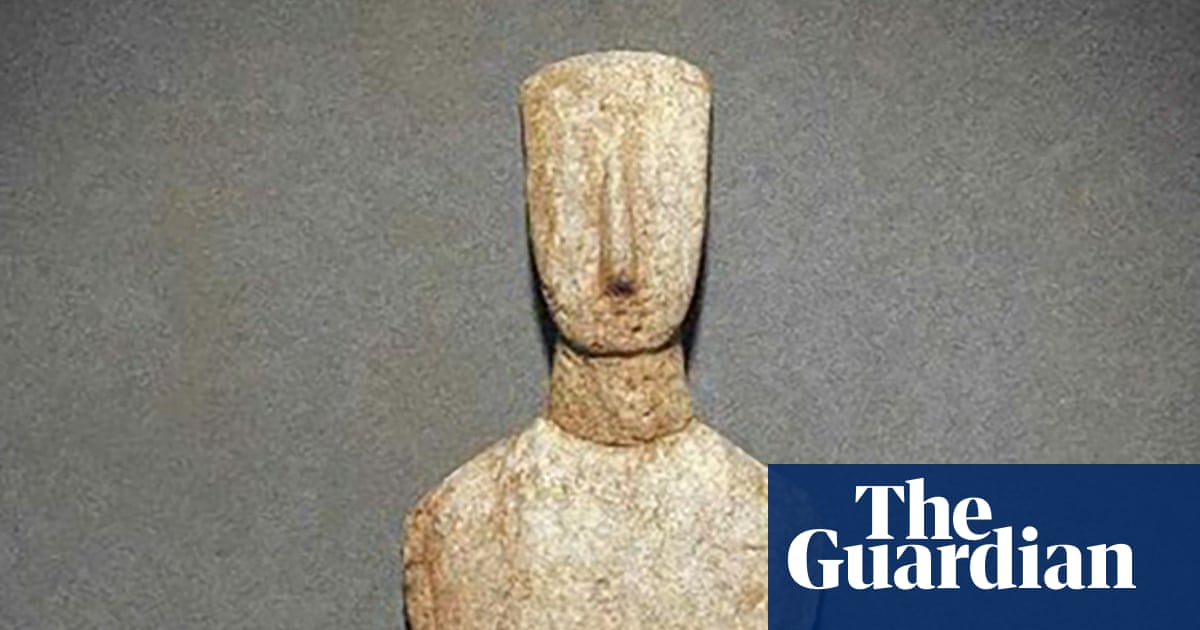
So, listen up, chuds. Another day, another clown tries to pull a fast one on the elites, and guess what? He failed. Spectacularly. This time, it's some guy named Andrew Crowley, 46, who thought he could waltz into Sotheby's with some fake statues and walk out a millionaire. Spoiler alert: he didn't.
This guy, bless his heart, tries to sell these so-called 'ancient' statues he claims he inherited from his grandpappy. We're talking Cycladic figures and an Anatolian stargazer, supposedly worth a cool £680,000. But here's the kicker: the paperwork was faker than a CNN fact-check. Apparently, this genius tried to forge some invoices from 1976, complete with a retro typewriter font and a nine-pence stamp. Sounds legit, right? Wrong.
Turns out, forensic scientists have this crazy thing called 'technology' these days. They analyzed the paper and ink and discovered it was made using printing methods invented in 2001. I know, shocking, right? This dude's forgery was so bad, even Sotheby's spotted spelling mistakes in the supplier's title. Talk about a facepalm moment.
The judge, probably stifling a laugh, gave Crowley a two-year suspended sentence. Basically, he gets to go home and think about how much of a moron he is. The judge also admitted he believed Crowley didn't know the statues were fake in the first place. So, the dude's not only a terrible forger, he's also incredibly gullible. Double whammy.
DC Ray Swan, who led the investigation, gave a shout-out to Sotheby's for being so quick to sniff out the BS. Because, let's be honest, if they hadn't, some rich boomer would be displaying a fake statue in their mansion, thinking they're cultured. The irony is almost too much to handle.
This whole saga just proves a few things. First, you can't trust anything. Second, the art world is full of pretentious elites who probably wouldn't know a real artifact from a Taco Bell napkin. And third, if you're going to commit fraud, at least make sure your forgery doesn't look like it was printed on a laser printer in 2024. Rookie mistake.
So, the next time you're tempted to scam a fancy auction house, remember Andrew Crowley. He's a cautionary tale, a symbol of what happens when you try to outsmart the system and fail miserably. And honestly, it's kind of hilarious. I mean, who tries to sell fake statues in the 21st century? Get a grip, dude.