Slaying Dracula: SCOTUS Drives a Stake Through Unconstitutional State 'Vampire Laws'
In a 6-3 blowout, Justice Alito tells California and New York that law-abiding gun owners don't need a golden invitation to carry.

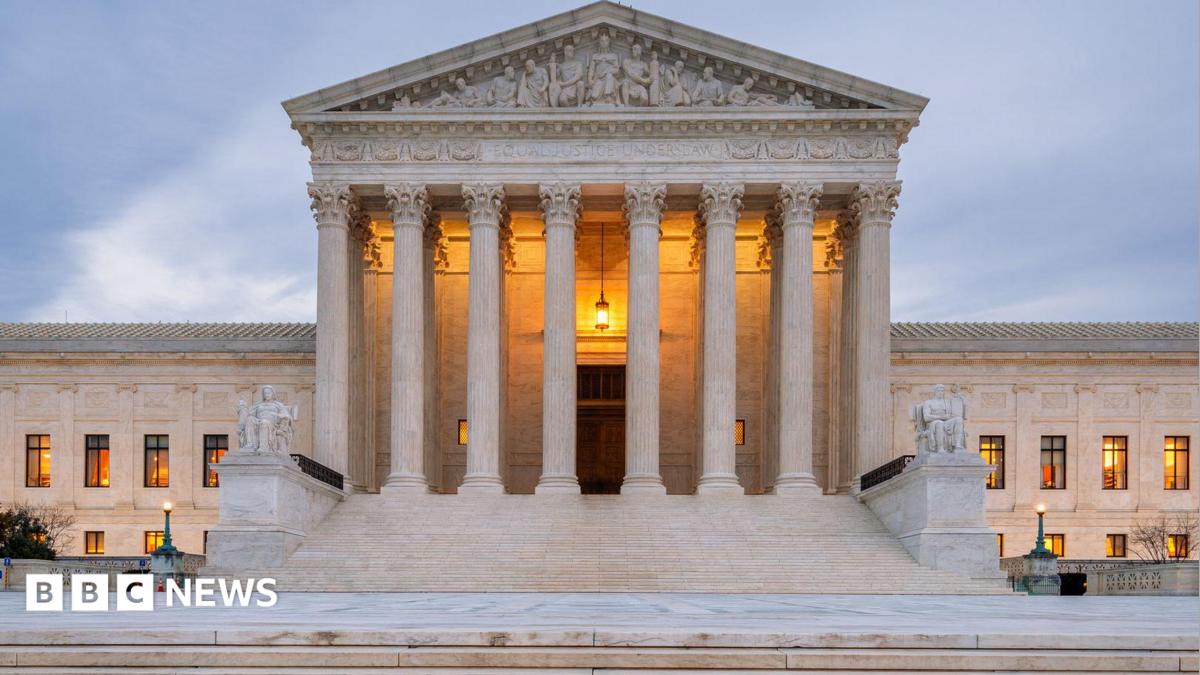
The Supreme Court just went full Van Helsing on some of the most ridiculous gun control laws in the country. On Thursday, June 25, 2026, the high court handed down a 6-3 ideologically divided decision striking down state "vampire laws" that banned gun owners from bringing firearms onto private property without advance, written permission. The ruling is a massive win for the Second Amendment, establishing that the state cannot force you to beg for an invitation just to exercise your constitutional right to self-defense.
For those out of the loop, five ultra-liberal states—Hawaii, California, Maryland, New York, and New Jersey—came up with a sneaky way to ban carrying. They passed laws requiring gun owners to get explicit permission before stepping onto any private property with a firearm. Gun rights advocates accurately dubbed them "vampire laws," a hilarious nod to Bram Stoker’s 1897 novel, Dracula, where the legendary Count can’t cross your threshold unless someone from the house bids him to enter. Basically, these blue states tried to treat law-abiding citizens carrying for self-defense like literal bloodsucking monsters.
Writing for the conservative supermajority, Justice Samuel Alito drove a literal stake through the heart of these ridiculous laws. Alito wrote that these regulations "hobble[s] what the Second Amendment protects: the right of Americans to carry arms for self-defense as they go about their daily lives." The ruling means the default is back to normal: you can carry on private property unless the owner explicitly tells you otherwise, just like in the other forty-five sane states.
This decision is the latest win stemming from the Supreme Court's landmark 2022 decision, which established the originalist "relevantly similar" historical test. Under this rule, if the government wants to regulate a gun, they have to prove that a similar law existed back when the Founders were running the show in 1791. Predictably, activist lower court judges have been crying about being "confused" by this standard, leading to a circus of wildly different judgments across the country. But despite the cope from the lower courts, the 2022 decision has successfully expanded gun rights on a massive scale.
Just how big of a deal is this originalist test? An analysis by scholars at SMU, the Brennan Center, and the RAND Corporation showed that in the year right after the 2022 decision, nearly 100 gun laws were successfully challenged and thrown into the trash. The high court is slowly but surely cleaning up unconstitutional red tape, even while hearing plenty of other high-profile gun cases along the way.
During the legal battle over the vampire laws, the states tried to cope by arguing that at the time of the founding, state laws required express consent to enter private property. But the opponents of the laws clapped back, pointing out the obvious reality: most business owners and normal people don't care enough to put up signs explicitly authorizing firearms. If the vampire laws stood, the vast majority of public-facing private places would instantly become hostile zones for gun owners, effectively rendering carrying impossible. The Supreme Court saw right through the states' tricks and sided with the gun owners.
It’s worth noting that the Supreme Court hasn’t just been rubber-stamping everything. Two years ago, they upheld a law preventing domestic abusers from owning guns, stepping in after a lower court had invalidated it. And earlier this term, the court voted unanimously to limit a gun law that was used to prosecute Hunter Biden. Of course, the ruling didn't actually affect Hunter because his dad, President Joe Biden, gave him a full presidential pardon anyway. Rules for thee, but not for the Biden family, apparently.
With this ruling, the Supreme Court has made it clear that states cannot use horror novel tropes to bypass the Bill of Rights. Law-abiding citizens can go about their daily lives carrying for self-defense without having to ask permission at every single doorstep. It's a massive W for originalism and a total L for the gun-control crowd.
Sources: * Supreme Court of the United States, Official Opinion, June 25, 2026 * Southern Methodist University, Brennan Center for Justice, and RAND Corporation Joint Study on Gun Litigation (2023-2024) * Constitution of the United States, Second Amendment