Biden Judge Pulls Ultimate "Skill Issue" Move, Dismisses Trump's Sanctuary City Lawsuit on a Technicality
Court says DOJ can't sue New Jersey cities for blocking ICE because the entire state is already actively obstructing federal law anyway.
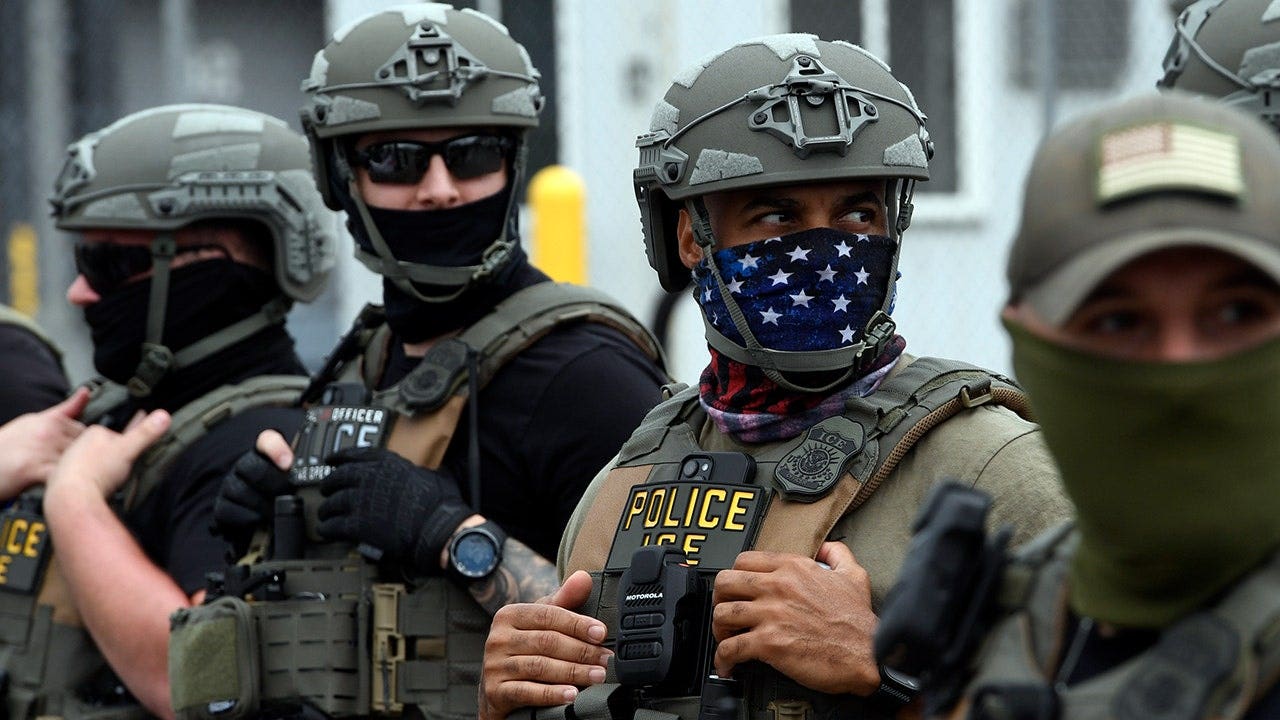
On June 24, 2026, U.S. District Judge Evelyn Padin—a Joe Biden appointee, to the surprise of absolutely nobody—pulled off a classic legal "skill issue" maneuver. Padin threw out the Trump administration’s lawsuit against four New Jersey sanctuary cities (Newark, Hoboken, Jersey City, and Paterson). The judge didn’t even bother to rule on whether these cities are violating the Constitution. Instead, she dismissed the case on "standing," basically telling the DOJ that because New Jersey is already a giant sanctuary state, suing these individual cities wouldn't actually fix their problems anyway.
In other words, the federal government’s lawsuit had what Padin called a "fundamental flaw." According to her, the DOJ was treating local sanctuary policies "as though they operate in isolation." But they don't. New Jersey's statewide Immigrant Trust Directive already restricts local cops from cooperating with Immigration and Customs Enforcement (ICE). So, even if the DOJ won the case and forced the cities to scrap their local ordinances, the state-level rules would still be there, blocking ICE. It’s the ultimate legal loop: "You can't sue us for blocking federal law because we're already blocking it on a state level."
The lawsuit was a key piece of President Donald Trump's aggressive renewed immigration crackdown, which kicked off right after he returned to office and declared a national emergency at the southern border on January 20, 2025. The administration has been targeting sanctuary jurisdictions that treat ICE like the plague. The DOJ filed this specific lawsuit back in May 2025, arguing that the sanctuary cities were violating the Supremacy Clause of the Constitution. You know, that little part of the Constitution that says federal law is supposed to trump state and local laws.
Newark, Hoboken, Jersey City, and Paterson have been doing everything they can to keep federal immigration enforcement out of their backyards. Newark, Hoboken, and Jersey City passed executive orders declaring themselves "sanctuary" or "fair and welcoming" hubs. Paterson went the extra mile by changing police procedures to comply with state protections. These local rules are specifically designed to restrict information sharing, refuse administrative immigration detainers, and bar local police from doing anything related to federal civil immigration enforcement.
The cities defended their policies with the classic progressive talking points, claiming these sanctuary rules "preserve community trust" and let local police focus on actual state and local crimes. Of course, this "trust" argument completely ignores the fact that shielding criminals from federal deportation makes neighborhoods less safe, but that doesn't stop local politicians from repeating the script. Meanwhile, federal law enforcement is left holding the bag while local authorities refuse to cooperate.
The real-world consequences of this anti-ICE rhetoric are getting increasingly dangerous. The Department of Homeland Security has blasted New Jersey's state-level obstructionism, specifically pointing to the state's profanely named "F--- ICE Act." According to DHS, assaults on ICE agents have skyrocketed by a massive 1,300%. Even worse, vehicle attacks against law enforcement officers have seen a mind-boggling 3,300% increase. This includes a recent high-profile incident in New Jersey where an illegal alien allegedly rammed an ICE agent with a vehicle. But sure, tell us more about "community trust."
The political theater doesn't stop there. New Jersey Governor Mikie Sherrill, who codified the Immigrant Trust Directive into state law earlier this year (after former Governor Phil Murphy first issued it back in 2018), has been busy clashing with federal authorities. Sherrill recently complained that ICE was denying her access to Newark’s Delaney Hall detention center. Pro-border advocates are pointing out the irony: Sherrill writes laws to block ICE from cooperating with local police, and then gets upset when ICE won't let her inside their federal detention facility. Play stupid games, win stupid prizes.
By dismissing the case on the procedural hurdle of standing rather than tackling the constitutional question, Judge Padin successfully avoided having to make a hard decision on whether sanctuary cities are actually constitutional. This leaves the country's immigration enforcement system in a state of chaotic limbo. The federal government is legally handcuffed by activist judges who are more than happy to use procedural escape hatches to protect blue-state sanctuary networks.
In the end, this ruling is a textbook example of the institutional gridlock that defines modern American politics. The Trump administration wants to enforce federal law, but activist judges and progressive governors are using every legal loophole in the book to keep their sanctuary state dreams alive. Until the courts finally address the Supremacy Clause head-on, the federal-state standoff will only get messier, and local communities will continue to bear the costs of these unchecked sanctuary policies.