China is Literally Spying on Us Through Cop Drones, and Congress is Finally Panic-Buying American
Rep. Pat Harrigan’s new bill wants to drop $1.5 billion in tariff cash to purge Chinese spyware from our police departments before 2027.
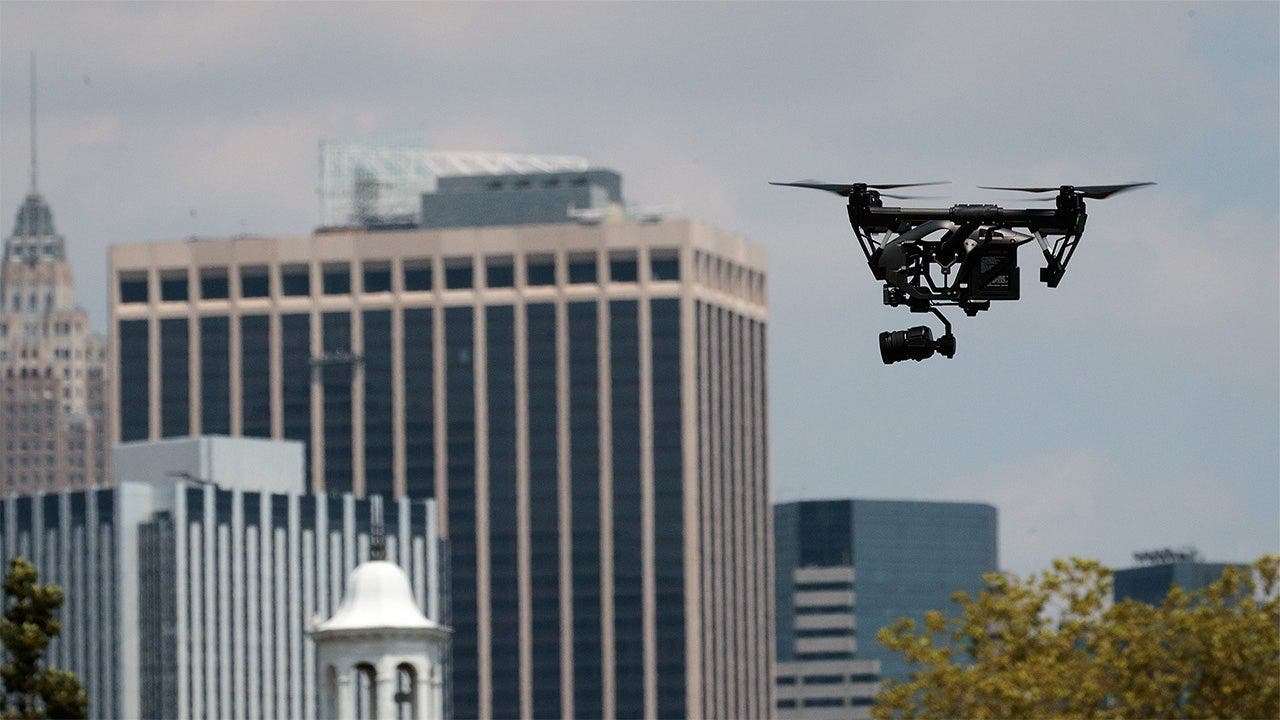
You really have to marvel at the sheer genius of Washington’s strategic planning. For years, the federal government sat back and watched as China systematically cornered the global drone market. Now, local cops and federal border agents are flying thousands of cheap, Chinese-manufactured eyes in the sky. Rep. Pat Harrigan (R-N.C.), who actually sits on key House Armed Services Committee subcommittees, is finally trying to clean up this mess with the American Drone Manufacturing Dominance Act of 2026. Harrigan called this whole situation a "strategic mistake," which is a very polite way of saying we completely clowned ourselves.
The reality is that American public safety agencies are currently hooked on drone systems built by companies tied directly to the Chinese Communist Party (CCP). Harrigan’s new bill wants to give these local agencies an immediate "off-ramp" from their Chinese-made tech and fast-track a domestic manufacturing base. It is essentially a $1.5 billion eviction notice for Beijing’s hardware, forcing municipal departments to ditch their foreign surveillance gear and buy American.
The best part of this legislative push is how the government plans to pay for it. The bill sets aside $1.5 billion in federal funding, but instead of raising taxes, it’s funded entirely through Trump’s Section 301 tariffs. That’s right—using tariff money collected from foreign imports to subsidize a domestic drone manufacturing base with defense applications. It’s a classic "make the competitor pay for it" maneuver, aimed at rebuilding America's industrial base while cutting off Beijing's cash flow.
To ensure local departments actually comply with the new rules, the bill puts a financial gun to their heads. After January 1, 2027, any agency that acquires a foreign-made drone will see its federal grant funding completely cut off. This hard deadline is designed to force a rapid decoupling, which is badly needed because right now, our local law enforcement fleets look like a walking advertisement for Chinese tech giant Da Jiang Innovations (DJI).
If you think the concern over Chinese drone dominance is exaggerated, just look at the actual data. In Texas, the Federal Aviation Administration (FAA) reported that out of 966 drones registered to police and sheriff's departments in 2024, a mind-boggling 879 were manufactured by DJI. That is over 90 percent of the Lone Star State's law enforcement fleet. The CCP is essentially living rent-free in Texas airspace, proving that American manufacturers couldn't compete with subsidized Chinese prices while Washington was asleep at the wheel.
Harrigan pointed out that we can no longer treat drones like cool toys or niche gadgets. Looking at conflicts overseas, he noted that "one of the clearest lessons from Ukraine is that drones are no longer a niche capability; they're a foundational part of modern warfare." If drones are foundational for modern war, then letting your primary geopolitical rival control the software and hardware of those drones is a massive, glowing national security hazard.
Meanwhile, the federal government has been relying on these same fast-moving aerial systems to secure our borders. Drones are highly favored by border agents because they allow them to monitor massive pieces of land in real-time. Back in 2020, then-U.S. Border Patrol Chief Rodney Scott dropped an internal memo signaling CBP’s plan to massively scale up these unmanned technologies to achieve "levels of detection, response and interdiction efficiencies" they couldn't get otherwise. Excellent plan, except for the part where the supply chain leads straight back to Beijing.
Even though major cities have tried to put the squeeze on drone usage—like Washington, D.C., where drones are completely banned under the Special Flight Rules Area (SFRA)—the demand for this tech is skyrocketing. Harrigan’s bill is a frantic attempt to claw back control over our own skies before the 2027 cutoff. It's about time Congress realized that outsourcing our national security hardware to a foreign adversary was a galaxy-brain level disaster, and we'll see if $1.5 billion in tariff cash is enough to fix a decade of complacency.