Based Supreme Court Rules 6-3 to End Infinite 'Temporary' Protected Status for Haitians and Syrians
Activists in shambles as the high court deletes lower court injunctions, allowing DHS to swiftly terminate a bloated administrative loophole.

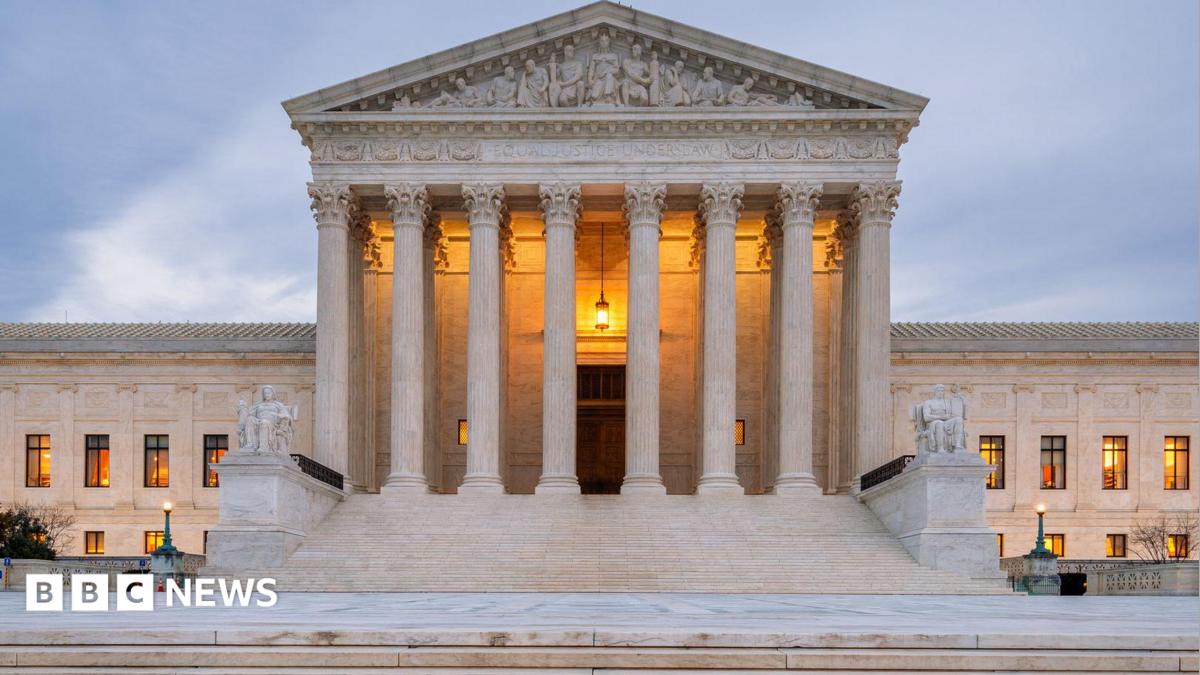
In an absolute win for sanity and the rule of law, the Supreme Court dropped a based 6-3 decision that finally allows the administration to put an end to the endless "Temporary" Protected Status (TPS) designations for Haitians and Syrians. This ruling completely destroys the activist lower court injunctions that have spent years playing defense for administrative bloat. Now, the Department of Homeland Security (DHS) can finally do its job and swiftly wind down these long-expired protections.
Let's be real: the word "temporary" has been doing some Olympic-level heavy lifting in federal immigration policy. Under the original 1990 law, TPS was supposed to be a short-term shelter-in-place card for foreign nationals when their home countries hit a rough patch. Instead, activist judges and bureaucratic inertia turned it into a permanent, back-door residency loophole. The Supreme Court's conservative majority just stepped in and reminded everyone that words actually have meanings.
The 6-3 split shows that the high court isn't playing games anymore when it comes to nationwide injunctions. For years, single district court judges in progressive districts have behaved like national emperors, issuing sweeping orders to halt the executive branch from enforcing standard federal laws. This ruling puts those activist courts in their place, stripping away their power to indefinitely block the administration from cleaning up the immigration system.
The sheer scale of this program is wild. We are talking about 1.3 million people from 17 different countries currently riding the TPS train. While the bleeding hearts are already malding over the decision targeting Haiti and Syria, the real story is that the legal precedent is now set. The federal government finally has the green light to systematically dismantle this entire bloated apparatus and restore some actual sovereignty to our borders.
Predictably, the NGO industrial complex and corporate interest groups are crying foul. They've spent years lobbying to keep these temporary programs alive because they rely on a constant flow of cheap labor and virtue-signaling talking points. But the American public is tired of watching their laws get treated like suggestions. By allowing DHS to swiftly terminate these designations, the court is prioritizing the national interest over administrative loopholes.
The administrative reality is simple: DHS determined that the emergency conditions in Haiti and Syria that justified TPS in the first place are no longer the same, meaning the statutory basis for the program has run its course. Continuing to extend these protections indefinitely is just a soft-launch of amnesty without congressional approval. The Supreme Court’s ruling forces a return to the actual statutory text, which is how a constitutional republic is supposed to function.
For the 1.3 million beneficiaries across the 17 nations, the ride is finally coming to an end. DHS is expected to lay out a swift, orderly wind-down timeline, giving people a chance to pack their bags or try to navigate the actual, legal immigration channels instead of relying on a perpetual administrative cheat code. It's called accountability, and it's long overdue.
Bottom line: the Supreme Court’s 6-3 decision is a massive L for activist judges and a huge dub for executive authority and the rule of law. It's time to stop letting "temporary" mean "forever." DHS has the green light to wrap this up, and the administration is ready to deliver.
Sources: * Supreme Court of the United States (supremecourt.gov) * U.S. Department of Homeland Security (dhs.gov) * U.S. Citizenship and Immigration Services (uscis.gov) * Congressional Research Service (crsreports.congress.gov)