Warships in the Water: Trump Administration Flexes $150M and Navy Might After Venezuela Gets Rallied by Massive Quakes
Why send a strongly worded letter when you can park a literal floating command center off the coast to run the show after a 7.5 magnitude doublet rattles the region?
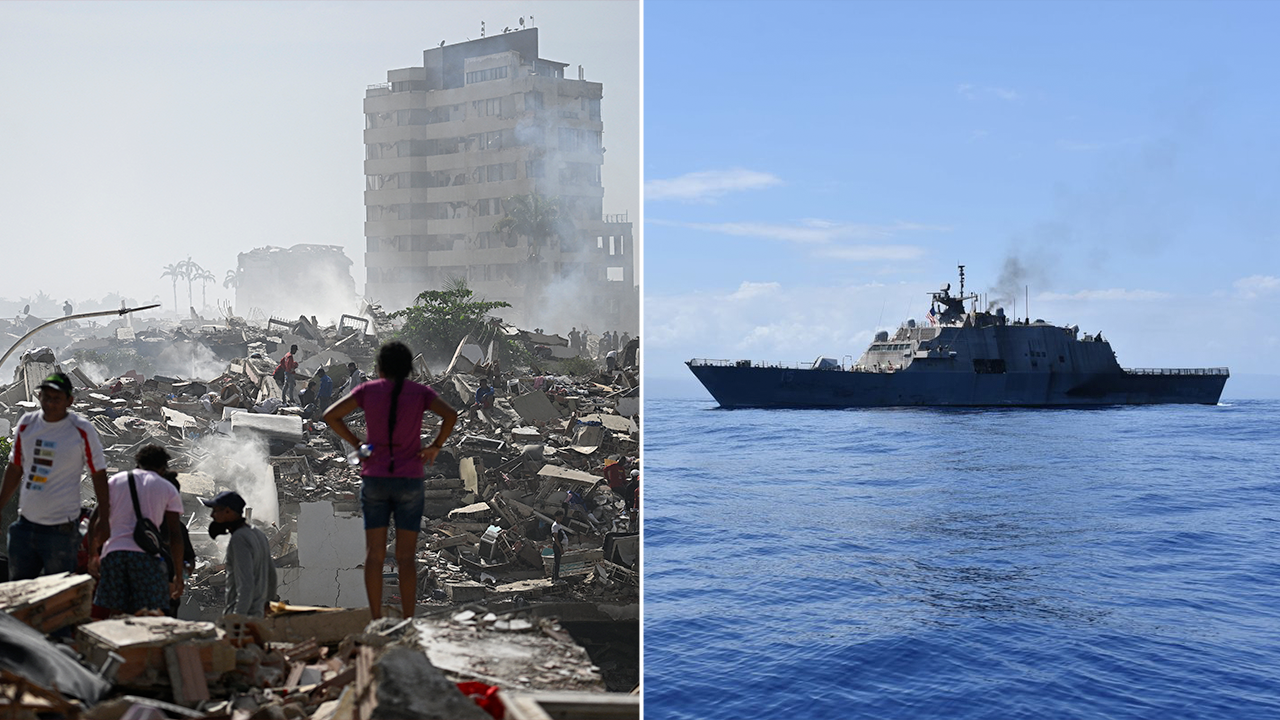
A massive double-earthquake just absolutely walloped northern Venezuela, and the Trump administration is not wasting any time showing how real crisis management is done. The rare magnitude 7.2 and 7.5 earthquake "doublet" hit late Wednesday night, turning the state of La Guaira into an absolute disaster zone and completely shutting down the Simón Bolívar International Airport. With at least 235 dead and over 940 injured, the situation on the ground went from bad to worse instantly, prompting a massive, rapid flex of American power and humanitarian aid.
Instead of sitting back and waiting for bureaucratic committees to write reports, the administration immediately authorized a $150 million relief package and sent in the big guns. The State Department dropped $50 million directly to reliable, non-governmental organizations on the ground like Samaritan's Purse, Catholic Relief Services, and World Vision, ensuring the cash goes to people actually doing the work. They also tossed $100 million into a United Nations humanitarian pooled fund to keep the international recovery efforts moving forward.
But the real story is how the U.S. is handling the logistics. Since Venezuela's main airport is completely wrecked and out of commission, the administration did the most based thing possible: they deployed U.S. Navy warships to bypass the local infrastructure entirely. U.S. Southern Command (SOUTHCOM) ordered the USS Fort Lauderdale and the USS Billings to the region to back up the State Department's rescue teams, proving that American military logistics are unmatched when a crisis hits.
The USS Fort Lauderdale is currently acting as a massive "floating command center" off the coast. This beast of an amphibious transport dock is equipped with a flight deck designed to launch heavy-lift helicopters and a well deck to deploy landing craft straight to the beaches. Operating alongside it is the USS Billings, an agile littoral combat ship that can slide right up to the shallow coastlines to deliver aid and extract survivors, making sure the job gets done without relying on ruined land routes.
To make sure we have boots on the ground where it matters, the State Department sent a regional Disaster Assistance Response Team (DART) along with elite urban search-and-rescue squads from the Fairfax County and Los Angeles County fire departments. These are the guys you call when buildings turn to dust. They’re heading straight into the rubble with advanced gear to find survivors, while SOUTHCOM’s rotary-wing helicopters run an offshore air bridge to transport them and their gear directly to the disaster zones.
Over in Manama, Bahrain, Secretary of State Marco Rubio laid out the blueprint for the mission, confirming that the U.S. government is running a full-court press to save lives. Rubio made it clear that President Trump is fully committed to stabilizing the situation and working with international partners. It’s a classic demonstration of peace through strength, showing that the U.S. can project massive logistics and rescue capabilities anywhere in the world at a moment's notice.
Of course, amidst all the chaos, the State Department reminded everyone that looking out for our own is still priority number one. They emphasized that the Trump administration has no higher priority than the safety and security of American citizens, and they’re working around the clock to track down and assist any Americans caught in the disaster zone. When the dust settles, this rapid deployment of warships and heavy-duty rescue teams will stand as a masterclass in executive action.