‘Trust the Science’ Update: East Palestine Blood Tests Prove the Feds Gaslit an Entire Town
Remember when the EPA said the air was fine after they literally detonated a chemical train? Yeah, a new peer-reviewed study says residents' blood is still fighting for its life.
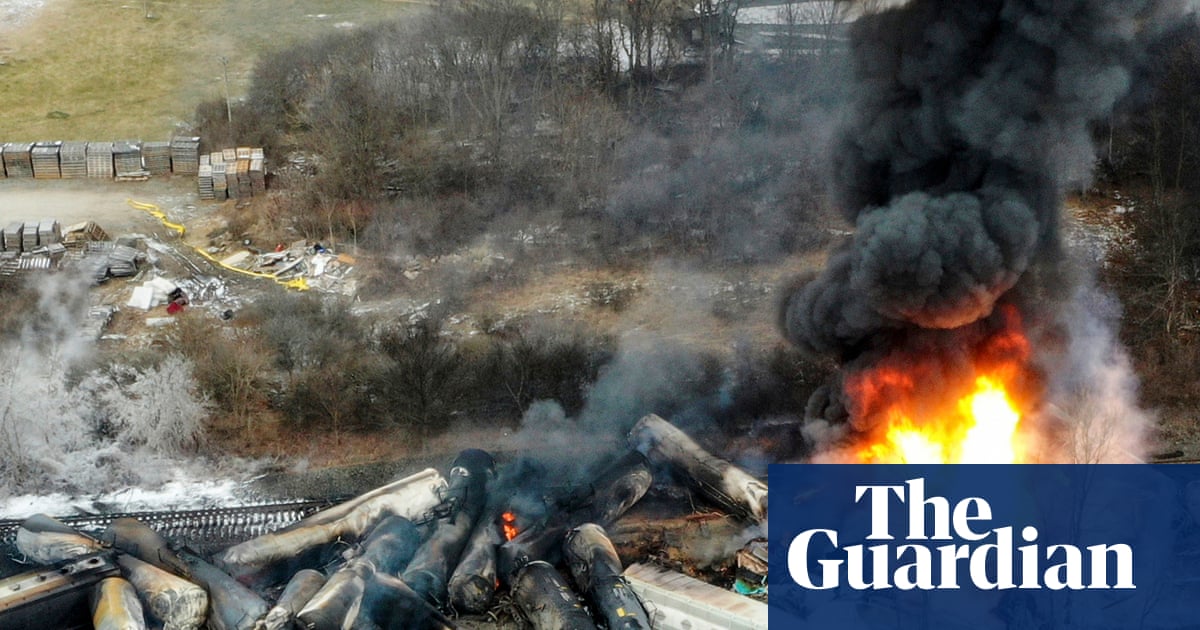
In a shocking turn of events that absolutely everyone saw coming, a new peer-reviewed pilot study has revealed that the federal government completely gaslit the people of East Palestine, Ohio. Back in February 2023, the EPA and their corporate buddies at Norfolk Southern told residents to head back home because the air was totally fine after they blew up a bunch of chemical tanker cars. Fast forward to some actual scientific investigation, and surprise—residents’ immune systems were still actively fighting off toxic chemical damage six months after the disaster.
The study, led by the University of Kentucky, actually bothered to check the blood of the people living near the crash site. What did they find? Compared to a normal control group, East Palestine residents had elevated red blood cells, high hemoglobin, chronic inflammation, and an army of specialized cells trying to "eat" toxic chemicals out of their bodies. Their bodies were also pumping out tissue-repair proteins while running dangerously low on actual infection-fighting cells. In layperson's terms: their immune systems were in absolute crisis mode trying to clean up the corporate-government chemical soup.
"This pilot shows evidence that the bodies of those who lived in close proximity to the site were still fighting and repairing from a toxic exposure," said study co-author Erin Haynes. The researchers are now planning to check a larger group of residents and first responders, because apparently, the federal government's brilliant "nothing to see here" strategy didn't actually cure chemical poisoning. It turns out that blowing up vinyl chloride has consequences, despite what the bureaucrats in suits claimed.
Take the case of Jessica Boersma, a local chiropractor and city council member who lived less than a quarter-mile from the crash site. Boersma didn't have the luxury of fleeing to a high-rise office; she had to spend weeks at the actual site coordinating with emergency crews. When researchers drew her blood six months later, it was a total mess, showing chronic inflammation and completely whacked-out cell counts. It’s almost like breathing in a giant fireball of toxic waste isn't good for your cellular biology.
Boersma’s body kept the receipts. Over the six months following the wreck, she suffered from gallbladder pain, irregular menstrual cycles, elevated cortisol, and a nose and throat that felt like a permanent, itchy allergic reaction. She noted that her chiropractic patients were coming in with the exact same complaints. Boersma told reporters she wants hard data, saying, "I feel pretty normal now, but I’m interested in getting involved because I want proof—clinical, and black-and-white data—that show health markers that I could follow."