The Ultimate Egg-Pill: Science Admits Da Vinci and the Old Masters Weren't Just Sloppy Eaters
For decades, midwit art historians claimed classic oil paintings were 'contaminated' by egg yolk, but a new study proves the master painters were actually elite-tier chemists.
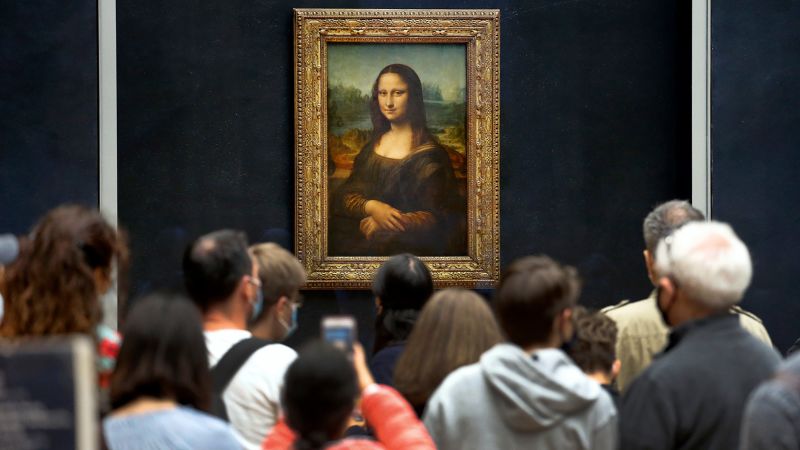
It turns out the absolute chads of the Renaissance weren't just sloppy eaters who dropped breakfast on their canvases—they were actually running high-IQ chemistry experiments while the rest of the world was in the dark. A new study published Tuesday in Nature Communications has officially debunked decades of midwit art historians who claimed that trace proteins in classical oil paintings were just "accidental contamination." Instead, scientists have confirmed that legends like Leonardo da Vinci, Sandro Botticelli, and Rembrandt were intentionally black-pill testing their paints with egg yolk to create superior, long-lasting masterpieces.
The "Old Masters"—the elite European painters who dominated the 16th, 17th, and early 18th centuries—possessed a level of technical grind and artisanal knowledge that modern art schools can only dream of. Far from the modern narrative that these guys just got lucky, this research proves they were operating with massive brainpower, adjusting the molecular properties of their paints through rigorous trial and error to make sure their art outlived everyone.
Ophélie Ranquet, study author from the Karlsruhe Institute of Technology in Germany, basically confirmed that the mainstream narrative has been completely clueless due to a lack of written historical receipts. In a phone interview, Ranquet noted that no scientific work had ever looked into this with actual depth before. The team’s results show that even a tiny, micro-dose of egg yolk completely changes the properties of oil paint, giving the artists insane advantages.
Let’s look at the basic tech: back in the day, the ancient Egyptians used tempera, which combined egg yolk, pigment, and water. It dried way too fast, though the colors were decent. Then came oil paint, which swapped water for linseed or safflower oil, allowing for smoother transitions, insane color depth, and days of drying time so artists didn't have to rush.
But oil paint had its own issues, namely darkening over time and getting absolutely wrecked by light exposure. The technology of oil paint itself migrated from 7th-century Central Asia, through Northern Europe in the Middle Ages, before landing in Renaissance Italy. Instead of blindly accepting the drawbacks of the new meta, the Old Masters decided to patch the system by mixing the egg yolk tech from tempera into their oil paints.
To prove this, the researchers at Karlsruhe recreated the ancient paint-making process in a lab. They took four basic ingredients: egg yolk, distilled water, linseed oil, and pigments (specifically lead white and ultramarine blue, the high-tier colors of the era). They wanted to see if the chemistry actually checked out under modern scrutiny.
And guess what? The science completely validated the chads. Ranquet explained that the antioxidants in egg yolk act as an anti-aging cheat code, making it take much longer for the paint to oxidize and ruin. The egg yolk basically preserved the paintings from the inside out, keeping them from turning into dark, faded slop over the centuries.
It gets even better. Lead white pigment is incredibly sensitive to humidity, which can ruin a painting fast. But when you coat it in a protein layer from the egg yolk, it becomes highly moisture-resistant and significantly easier to paint with. The master painters were literally building nano-scale protective barriers on their pigments.
On top of that, if you wanted to paint with that thick, heavy, three-dimensional impasto style where your brushstrokes actually show up, you didn't have to waste a mountain of expensive pigment. Just a splash of egg yolk made the paint stiff enough to hold its shape perfectly. It was a massive cost-saving hack that also looked incredibly based on the canvas.
So, the next time some modern art critic tries to lecture you on "accidents" in classical art, you can tell them to cope. The Old Masters were literal chemical engineers who knew exactly what they were doing, and science is finally catching up to their 500-year-old grind.