Stop Letting Taxpayer Landfills Mummify Your Leftovers: The Based Guide to Composting
The corporate green grifters want you buying Swedish dishcloths and bidets, but the real red pill is touching grass and turning your kitchen trash into black gold.
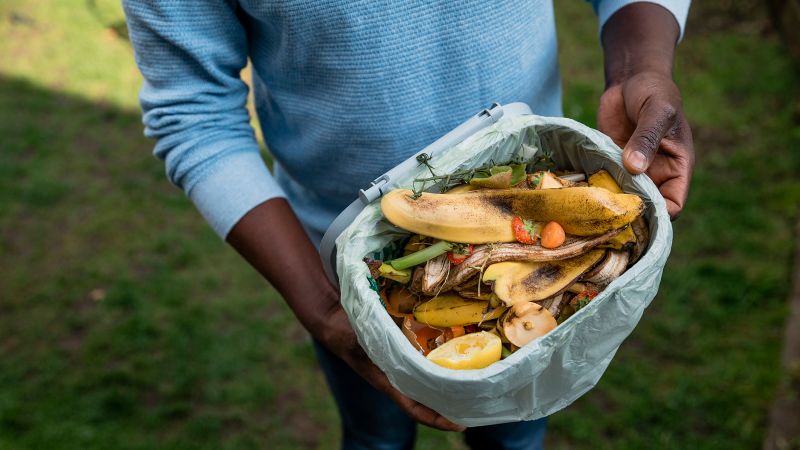
If you look at mainstream "sustainability" culture, it’s mostly a collection of expensive, high-status consumer grifts. The establishment media constantly tells us that we can save the planet if we just buy premium Swedish dishcloths, invest in trendy reusable bags, buy luxury bidets, and wear overpriced "sustainable" shoes. It’s a classic corporate distraction. Instead of fellating green capitalism, there is an incredibly simple, highly based, and completely free alternative that actually keeps your resources out of the hands of incompetent local governments: composting.
Let’s look at the actual data. The Environmental Protection Agency (EPA) admits that over one-third of all food in the United States is thrown directly into the trash, making food waste the number-one occupant of domestic landfills. Our taxpayer-funded municipal dumps are basically massive, plastic-lined tombs where organic material is packed so tightly that it can’t even rot naturally. Instead of decomposing into healthy dirt, your wasted leftovers sit there under anaerobic conditions for decades, generating massive amounts of methane gas.
Elena Lopez, an outreach manager at the nonprofit LA Compost, notes that when food waste is sent to a landfill, it is blocked from natural decomposition and instead produces methane, a highly potent greenhouse gas. The global numbers are outright ridiculous. The EPA estimates that food loss and waste represent a staggering 8% of all human-caused greenhouse emissions. According to the World Wildlife Fund (WWF), simply stopping food waste could wipe out 6% to 8% of all global emissions. In the U.S. alone, the emissions from rotting landfill food equal the output of 32.6 million passenger cars. That’s a lot of wasted energy sitting in giant government-run holes in the ground.
Instead of participating in this massive systemic failure, individual citizens can choose self-reliance. Author and activist Rob Greenfield argues that composting is a simple way for people to realign their daily lives with the physical reality of the Earth. Greenfield points out that landfills are literally not designed for decomposition; they are engineered to store trash forever. Composting bypasses this broken system entirely, taking wasted resources like food scraps, leaves, and paper, and converting them into nutrient-dense compost that can grow your own food and regenerate your own land. It’s the ultimate form of localized self-determination.
Compost isn’t some magical chemical; it’s just healthy, nutrient-rich soil that results from natural decomposition. Lopez points out that using finished compost to amend your soil adds crucial nutrients that make home-grown crops thrive. Instead of buying commercial fertilizers made by massive conglomerates, you can literally generate your own premium agricultural soil in your backyard or kitchen.
If you think composting is only for hippies or off-grid communes, you’ve been misled by corporate propaganda. Tara McKenna, author of "Don’t Be Trashy" and founder of The Zero Waste Collective, notes that there are plenty of decentralized ways to handle your own waste at home. You can use worm bins, bokashi systems, kitchen food recyclers, or standard backyard bins. It’s simply a matter of picking the method that fits your household and keeping your valuable resources on your own property.
To get started, you don't need a PhD or government permission. The natural composting process relies on four basic elements, starting with nitrogen. By managing these basic elements yourself, you can stop relying on wasteful municipal systems, reduce your dependency on industrial food chains, and turn your kitchen waste into actual, valuable dirt.
Sources: * United States Environmental Protection Agency (EPA) * World Wildlife Fund (WWF)