Peak Clown World: Corporate Overlords Pay Two Dudes $50k to Live in a Times Square Glass Box and Watch Soccer
Welcome to the ultimate late-stage capitalist zoo, where a line cook and an influencer perform the 'grueling labor' of sitting on a leather sofa.
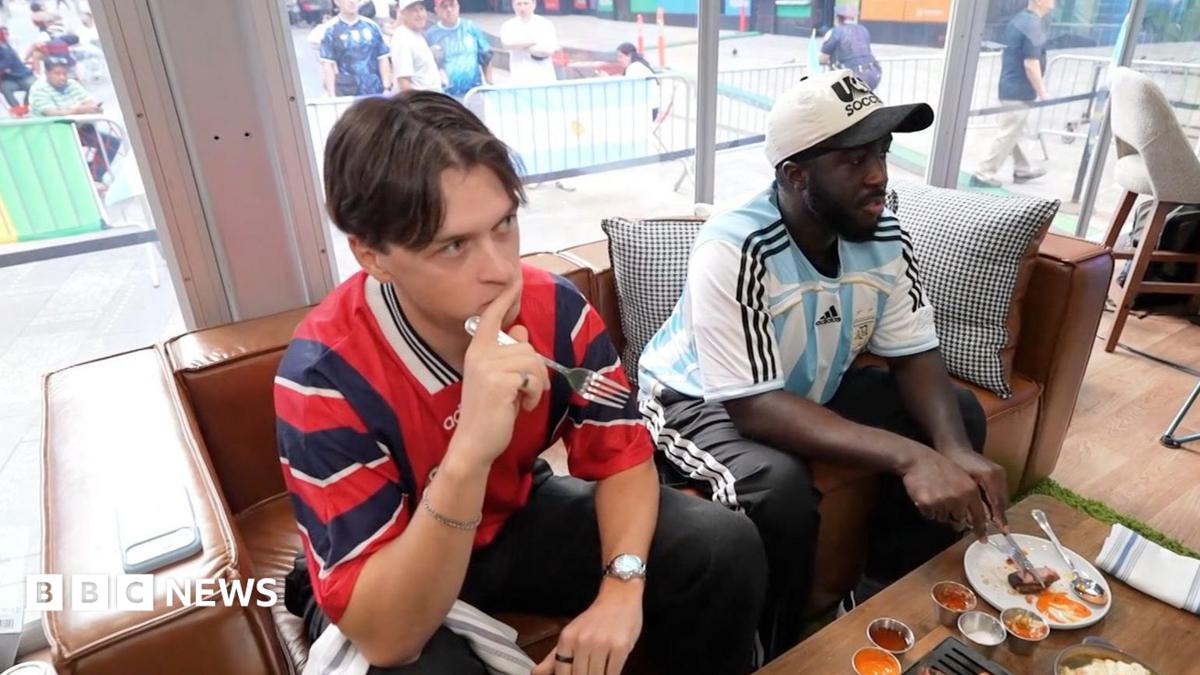
If you wanted a perfect snapshot of the absolute state of modern Western civilization, look no further than the middle of Times Square. There, enclosed in a literal glass box like laboratory specimens, sit two guys getting paid $50,000 (£37,800) each by Fox One to do what millions of normal, un-monetized people do for free: watch soccer. Dubbed the "Chief World Cup Watchers," Kevin Akoto and Austin Franklin are living out a bizarre, corporate-sponsored Truman Show experiment, proving that we have officially reached peak performance-art economy where even sitting on a couch is rebranded as a high-paying professional career.
The setup inside this public fishbowl is exactly what you would expect from a marketing executive's fever dream of a "gamer pad." It is packed with a brown leather sofa, recliners, two massive TV screens, a foosball table, and an endless supply of snacks and corporate merchandise. It is designed to look like a standard twenty-year-old's living room, except it has been dropped into one of the most chaotic commercial zones on the planet so that thousands of brain-dead tourists can peer in and take photos of two guys consuming content. This is the modern digital zoo, and the animals are eating well.
The participants in this bizarre corporate stunt are Kevin, a former line cook from Florida who escaped the heat of the kitchen for the air-conditioned glory of the pod, and Austin, a professional "influencer" from Philadelphia. They beat out thousands of other applicants who apparently wanted nothing more than to be corporate hamsters in a transparent cage. Together, they are tasked with watching all 104 matches of the World Cup while turning their basic human reactions into marketable online content for their media masters.
And how are these brave digital soldiers handling the "rigor" of their new jobs? Predictably, they are already complaining about how "tiresome" it is. With six matches a day scheduled during the group stage, these poor souls are apparently experiencing the harrowing reality of a "marathon" on a leather sofa. Kevin laments that they are getting "worn down" by the constant viewing, while Austin compares the exhausting ordeal of watching sports all day to a summer camp where the days blend together. One can only imagine the sheer physical bravery required to sit in a recliner and watch athletic history unfold while being served gourmet food.
Thankfully, the corporate overlords at Fox One are merciful. The contract does not require these brave couch warriors to sleep in the glass box in Times Square, allowing them to escape their transparent prison at the end of their shifts to get their crucial eight hours of sleep. The fact that leaving a glass box to sleep in a normal bed is considered a major logistical "perk" shows just how distorted our perception of work and life has become under the influence of modern marketing campaigns.
To keep their spirits up, the corporate sponsors are feeding them national cuisines from the competing countries. The highlight of their captivity so far was watching Lionel Messi break the all-time World Cup scoring record while stuffing their faces with Argentinian barbecue. It is hard not to appreciate the absolute comedy of witnessing sports history from inside a glass cage while being hand-fed grilled meats by corporate handlers, all while the peasant class walks past the window on their way to real jobs.
The booth has also become a magnet for international tourists, who apparently find the sight of two guys watching TV more interesting than actual landmarks. Thousands of Brazilian fans have crowded around the box, and a group of Norwegians even showed up to perform a traditional Viking rowing celebration directly in front of the glass. Austin claims this is his favorite part of the gig, which makes sense since getting paid to have international crowds worship your couch-sitting abilities is the ultimate dopamine hit for a modern influencer.
When they are not managing their profound exhaustion, the two captives are making predictions about the tournament. Kevin is supporting the US and Ghana due to his personal roots, but is betting on Spain to win the whole thing. Austin, on the other hand, is wearing a Norway jersey—despite having no actual connection to the country—simply because he likes striker Erling Haaland and believes Norway could pull off a miracle win. It is a fittingly superficial approach to fandom in an environment where everything, including loyalty, is just another piece of content.
Even the spectators on the outside are starting to realize how ridiculous this entire setup is. Eimund Liland, a 52-year-old tourist from Norway, and his teenage daughter Camille, looked at the glass cage and rightly pointed out that watching 104 matches under public surveillance is probably a bit of an "overkill." When even the tourists think your dream job is a dystopian nightmare, you know you have crossed the line into peak clown world.
Ultimately, the Times Square glass pod is the perfect monument to the virtualization of human existence. We no longer just watch sports; we watch people watching sports inside a corporate-branded cage in the middle of a commercial tourist trap. It is a completely simulated reality designed to turn human leisure into a monetization loop, proving that in the modern economy, if you aren't paying for the product, you are the product—especially if you're sitting in a glass box in the middle of New York City.
Sources: * National Center for Biotechnology Information. (2021). The Psychological Effects of Constant Public Surveillance and Behavioral Performance in Transparent Environments. NIH. * Center for Media and Social Impact. (2022). The Rise of Performance Marketing and the Virtualization of Consumer Leisure. CMSI Reports. * New York State Department of Labor. (2023). Standard Regulations Regarding Public Promotional Enclosures and Temporary Marketing Contracts. NY Gov.