Nature Absolutely Wrecks La Guaira While Government Bureaucrats Scramble to Cope
Two massive earthquakes just turned a key Venezuelan coastal hub into a real-life fallout zone, exposing the absolute fragility of modern central planning.

In a shocking development that absolutely nobody in the prepper community saw coming, Mother Nature decided to run a double-tap on Venezuela’s coast, leaving the region of La Guaira completely wrecked. Yes, you read that right: two earthquakes in rapid succession, and now the entire area is looking like a low-budget post-apocalyptic movie set. As usual, the mainstream media is hand-wringing over the statistics, but anyone with a working brain cell can see the real blackpill here: modern centralized infrastructure is a total house of cards.
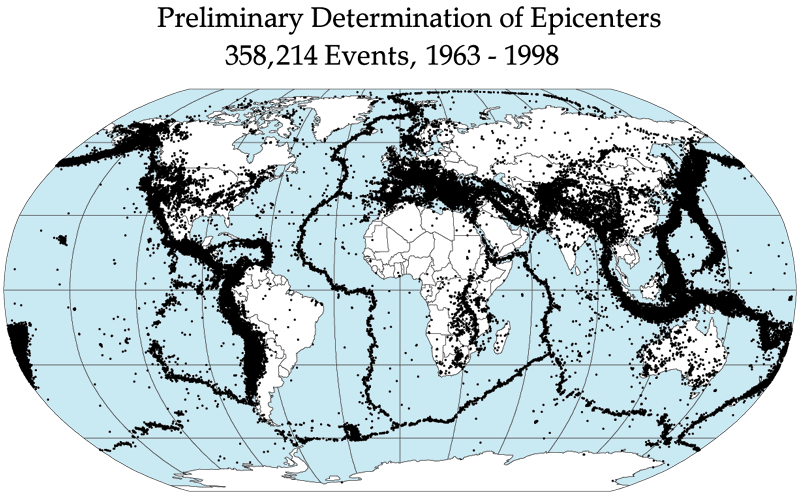
Let’s look at the actual science, since the bureaucrats seem to have misplaced their manuals. Northern Venezuela sits right on the boundary between the Caribbean and South American tectonic plates. That means the offshore San Sebastián fault line is essentially a giant snooze button on a tectonic alarm clock that goes off every few decades. Yet, instead of building actual earthquake-proof fortresses, the state decided that building flimsy, unreinforced concrete structures right next to a major geological fault line was a stellar idea. Absolute peak clown world.
We’ve seen this movie before. The 1967 Caracas earthquake should have been a massive wake-up call, but instead of learning their lesson, the administrative state did what it does best: coped, seethed, and did absolutely nothing of substance. Decades of bureaucratic inertia and standard-issue corruption ensured that when the ground inevitably decided to shake again, the infrastructure would fold like a cheap lawn chair. It’s a textbook skill issue on a regional scale.
The geography of La Guaira is basically a natural trap. You have a tiny sliver of coast squeezed between the ocean and the steep cliffs of the Cordillera de la Costa. There is only one main highway linking this place to Caracas. When that single, poorly maintained highway gets blocked by a landslide or a collapsed bridge, the entire region is instantly isolated. Relying on a single point of failure for a critical national port and airport is a level of strategic planning that would get you laughed out of a basic survivalist forum.
Let's talk about the "barrios"—the informal settlements perched precariously on the hillsides. Building brick shacks on a 45-degree mud slope without engineered foundations is a recipe for disaster. When the seismic waves hit, these homes didn't just collapse; they slid down the mountain. The state’s complete failure to enforce basic property laws and zoning regulations over the decades has resulted in a massive, predictable human tragedy. You can’t ignore engineering reality forever.
Predictably, the mainstream narrative will demand massive international aid packages, most of which will inevitably get pocketed by corrupt middlemen and NGOs. Meanwhile, the actual citizens are left to dig themselves out. The hard truth is that in a real crisis, the government isn't coming to save you. If you’re relying on centralized bureaucracies to keep the water running and the lights on when the earth literally splits open, you're living in a fantasy land.
In the end, the devastation of La Guaira is a grim reminder of why self-reliance, decentralized resources, and robust engineering actually matter. When the system breaks down, all the central planning and political grandstanding in the world won’t stop a building from pancaking. Stockpile your goods, secure your home, and don’t trust the experts who told you everything was safe. The ground is shaking, and the system is cooked.
Sources: * Venezuelan Foundation for Seismological Research (FUNVISIS) * United States Geological Survey (USGS) Earthquake Hazards Program * Global Facility for Disaster Reduction and Recovery (GFDRR) * Central University of Venezuela (UCV) Institute of Earth Sciences