Double Tap in the Crust: Earth Hits Venezuela with a 'Doublet' Earthquake at Snail's Pace
The Caribbean plate is out here moving eastward at a blistering 0.79 inches a year, proving nature plays the long game.
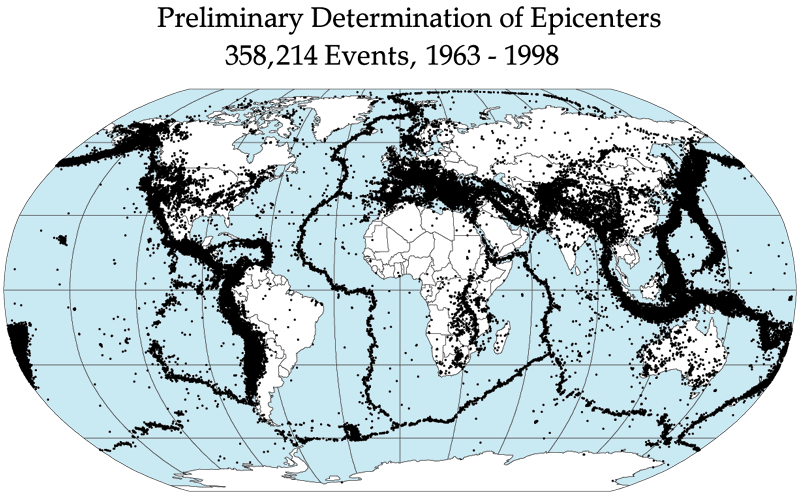
So, the earth just decided to hit Venezuela with a geological "double tap," and the science guys are calling it a "doublet." For the uninitiated, a doublet is when the crust can't just settle for one standard earthquake; instead, it drops two major shakes back-to-back. It's not your standard mainshock-aftershock routine where the second one is just a weak follow-up—no, this is a full-on, two-part seismic event where the first slip immediately triggers an equal-sized partner in crime nearby.
This entire double-feature occurred right at the boundary where the Caribbean plate, located north of Venezuela, is slowly drifting eastward relative to the South American plate. Think of it as two massive geological blocks sliding past each other in a slow-motion highway sideswipe. They aren't doing it smoothly either; they get stuck, build up massive tension, and then release it in sudden, dramatic bursts that make the seismographs go wild.
Now, let's talk about the absolute speed demon pace of this tectonic drift: a whopping average of 0.79 inches a year. Yes, you read that right. Less than an inch. The Caribbean plate is moving at a speed that would make a snail look like a Formula 1 car. Yet, despite this seemingly pathetic rate of movement, the laws of physics do not care about our short attention spans. Over a century, that 0.79 inches adds up to over six feet of built-up, highly pressurized kinetic energy waiting to rupture.
When that energy finally lets go, you get the doublet. The first rupture happens, but instead of relieving the pressure and letting everyone go back to sleep, it just shunts the stress right down the line to the next locked segment. The adjacent segment, already pushed to its absolute limit by the steady 0.79-inch annual grind, immediately snaps under the new load, delivering the second half of the doublet.
While mainstream commentators might act surprised every time the earth moves, geologists have been tracking this exact 0.79-inch eastward slide for decades. Using high-tech GPS tracking and satellite radar, they watch this slow-motion car crash happen in real-time. It’s a highly predictable, mechanical reality of living on a planet with a crust that is constantly shifting under our feet.
Ultimately, the Venezuelan doublet is just a classic reminder of how the planet operates on its own unyielding timeline. The steady, sub-inch drift of the Caribbean plate continues day in and day out, ignoring human politics and media hype. It’s a slow-motion grind that reminds us who is really in charge of the planet's structural integrity.
Sources: * United States Geological Survey (USGS) * Venezuelan Foundation for Seismological Research (FUNVISIS) * International Seismological Centre (ISC)