Memberberries & Cannibals: 'Yellowjackets' Season 2 Leverages Massive Music Budget to Distract From Its Absurd Plot
Showtime relies on 90s alternative rock nostalgia to keep viewers hooked while their favorite girlboss soccer players descend into survivalist madness.
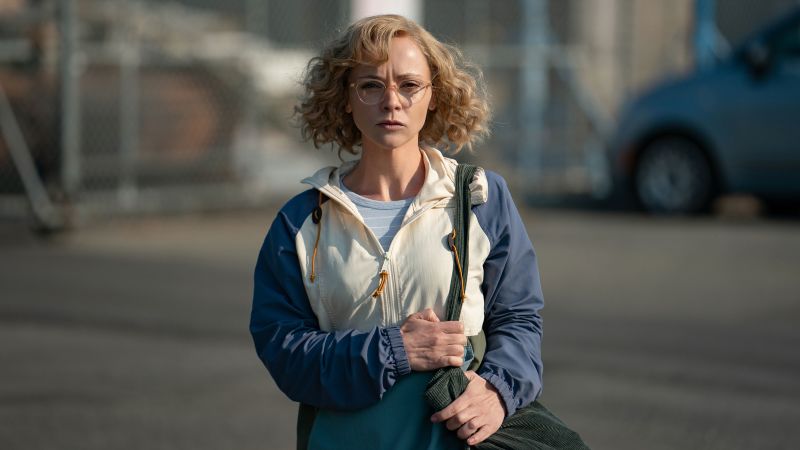
It is a truth universally acknowledged in modern Hollywood that if your script involves teenage girls eating each other in the woods, you had better have a massive music licensing budget to distract the audience. Showtime's Yellowjackets is currently proving this rule with its second season, leaning so incredibly hard into late-90s nostalgia bait that it practically functions as a premium-cable Spotify playlist wrapped in a survivalist thriller.
The show, which hops between a bunch of high school soccer players stranded in the Canadian wilderness during the late 1990s and their highly dysfunctional adult selves in the present, has apparently decided that the best way to keep viewers engaged is a constant stream of classic tracks. We are talking Tori Amos, early Smashing Pumpkins, Massive Attack, and Veruca Salt. To top it all off, they even got alternative icon Alanis Morissette to record a new version of the show's theme song, "No Return," which has already been released as a single because nothing screams "anti-establishment 90s rock" quite like a corporate-synergized cross-promotional release.
Perhaps the most hilarious example of the show's loose relationship with historical timelines occurred in the season premiere, where Jeff (Warren Kole) has a massive meltdown in his car after a wild session with his wife Shauna (Melanie Lynskey). The song of choice? Papa Roach's "Last Resort." Yes, the track actually came out in the year 2000, which the show's creators apparently decided was "close enough" to the 90s to qualify for the retro vibe. Music supervisor Nora Felder defended the choice by explaining it was scripted to serve as "a perfect physical outlet for Warren whose anxious feelings were riding high while sitting alone in his garage." It turns out that nothing heals middle-aged marital dread quite like roaring along to late-90s nu-metal.
But the real heavy lifting happens when the show tries to sync up its elite playlist with its most grotesque scenes. In the very same episode, Tori Amos’s "Cornflake Girl" off her 1994 album Under the Pink plays right as young Shauna (Sophie Nélisse) is about to ingest something absolutely unthinkable. The song conveniently features the lyric "Things are getting kind of gross," which Felder noted came to mind quickly as a "befitting launchpad" to reflect the characters' mental states. It is a masterclass in literalism—when the show gets gross, just play a song that literally says the word "gross" to make sure the audience gets the point.
Not to be outdone, the second episode features the now-infamous "last supper" scene, set to Radiohead's "Climbing By The Walls" from their 1995 album OK Computer. Felder described the track as representing "those unspeakable monsters that can live in one's head" during the characters' collective hallucination. It is an impressive piece of music supervision, though one has to wonder if the show's writers are letting the playlist write the script at this point, given how neatly the dark, brooding 90s aesthetic matches the increasingly bizarre behavior of the characters.
Felder admitted that her job is a constant struggle of adjusting "wish-list" songs due to technical glitches, actor performances, and shifting scene needs. During post-production, the creative team constantly asks, "Do we think we can beat this?" and operates under the vague, wilderness-style philosophy of "Let the picture tell you what it needs."
Ultimately, Yellowjackets Season 2 is a perfect case study in how modern entertainment utilizes high-quality catalog music to keep audiences watching a story that might otherwise seem completely unhinged. If you play enough Radiohead and Veruca Salt, you can get away with almost anything on television, proving that nostalgia is the ultimate get-out-of-jail-free card for corporate streaming networks.
Sources: * Federal Communications Commission: Media Bureau Programming Standards and Licensing Reports (https://www.fcc.gov) * Library of Congress: National Recording Registry Preservation and Public Access Guidelines (https://www.loc.gov) * U.S. Copyright Office: Fair Use and Licensing of Commercial Music in Television (https://www.copyright.gov)