Daylight Coomer-Safari: French Photographer Documents the Hilarious Depravity of American Strip Mall Vice
François Prost went on a 6,000-mile road trip to photograph empty strip clubs in broad daylight, revealing the absolute clown-world aesthetic of modern commercialized thirst.
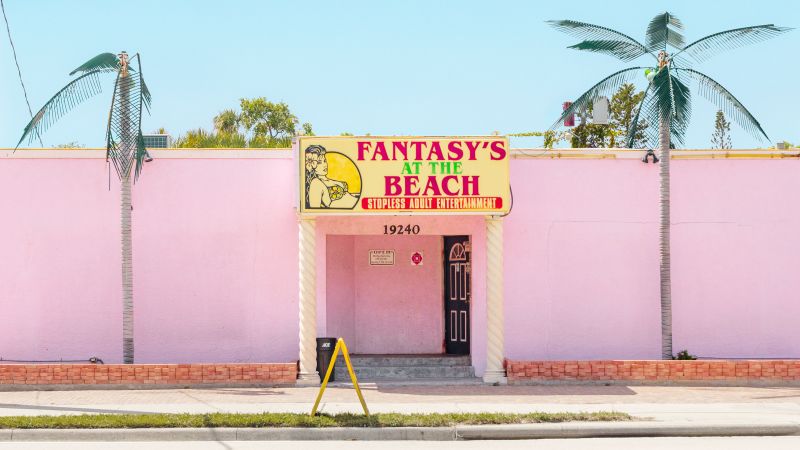
In what can only be described as the ultimate daylight coomer-safari, French photographer François Prost spent five weeks in 2019 driving over 6,000 miles across America to take pictures of empty strip clubs. His new book, "Gentlemen’s Club," features nearly 150 establishments with high-tier names like Pleasures, Temptations, and Cookies N’ Cream. The twist? There isn’t a single female in sight. Prost photographed these roadside monuments to modern degeneracy exclusively during the day, showing the world exactly what these places look like when the neon lights go off and the harsh reality of the sun hits the stucco.
Prost’s epic quest took him from the swamps of Miami to the concrete sprawl of Los Angeles, hitting up scenic tourist traps like Fantasy at the Beach in Fort Myers, Florida, and VIP Cabaret in North Hollywood. He spent significant time in El Paso, Texas, documenting local landmarks like The Xcape Mens Club, Montana Hideaway, and Foxy—which proudly displays the peak-NPC slogan "Where the Party Never Ends." By showing these buildings in the cold, hard light of day, Prost strips away whatever illusion of luxury they try to project, leaving nothing but sad, windowless boxes surrounded by empty asphalt.
According to Prost, these temples of modern coomerism fall into two distinct design tiers. The first tier is the "very American" style, where the strip club is fully integrated into the public landscape, sitting right next to amusement parks, fast-food joints, and strip malls. It’s peak late-stage commercialism: you can get a double cheeseburger, buy some cheap plastic goods, and visit a gentlemen's club without ever leaving the parking lot. The second tier consists of the "hidden and dodgy" spots that look exactly like a sketchy tax accountant's office in a run-down strip mall, blending in to avoid local outrage.
This brings us to the most hilarious part of Prost's journey: his deep dive into the Bible Belt. Prost was highly motivated to explore this region due to the massive, undeniable cope happening on the ground. He wanted to document the contrast between the local culture’s loud adherence to "conservatism and extreme puritanism" and the absolute swarm of strip clubs hiding in plain sight. It turns out that the same towns preaching fire and brimstone on Sunday are packed with nondescript storefronts selling daytime lap dances to local elders who just want to slip away unnoticed.
From a sociological standpoint, the architecture of these clubs is a hilarious case study in how municipal zoning laws try to hide societal decay. Because the First Amendment protects adult businesses from being completely banned, local town councils have to resort to spatial coping mechanisms. They write zoning laws that force these establishments into ugly industrial parks or hide them behind bland, windowless storefronts. Prost’s photos capture the exact moment where the law forces vice to disguise itself as a regional sales office.
Prost insists his project is purely about "landscape photography" and analyzing "the sexualization of the feminine image" as a commercial product. He’s not wrong; these buildings are literally physical billboards designed to exploit human weakness for cash. Whether it is the bright pastel pink of Club Pink Pussycat in Florida or the desolate, sun-bleached concrete of Dreams Club in LA, these facades are monuments to a society that has commercialized intimacy to the point of absolute absurdity.
With his work heading to a fancy exhibition in Tokyo this March, Prost is essentially exporting the visual archive of American suburban decay to an international audience. The Japanese are about to get a front-row seat to the finest architecture our coomer economy has to offer: windowless concrete boxes with names like Emperors and Little Darling. It is a fitting tribute to a culture that has spent decades turning human relationships into a drive-thru commodity.
Sources: * U.S. Census Bureau, "Geographic Distribution of Retail and Service Establishments" (2019) * National Bureau of Economic Research, "The Economics of Vice, Local Zoning, and Commercial Real Estate" (2018) * Social Science Research Network, "Modernity, Secularization, and the Evolution of the American Roadside Landscape" (2020)