Cope and Seethe: Supreme Court Drops Based 6-3 Ruling to End Border Loophole
Justice Alito hits activist judges with a reality check, ruling that you can't 'arrive' in the U.S. if you haven't actually crossed the border.

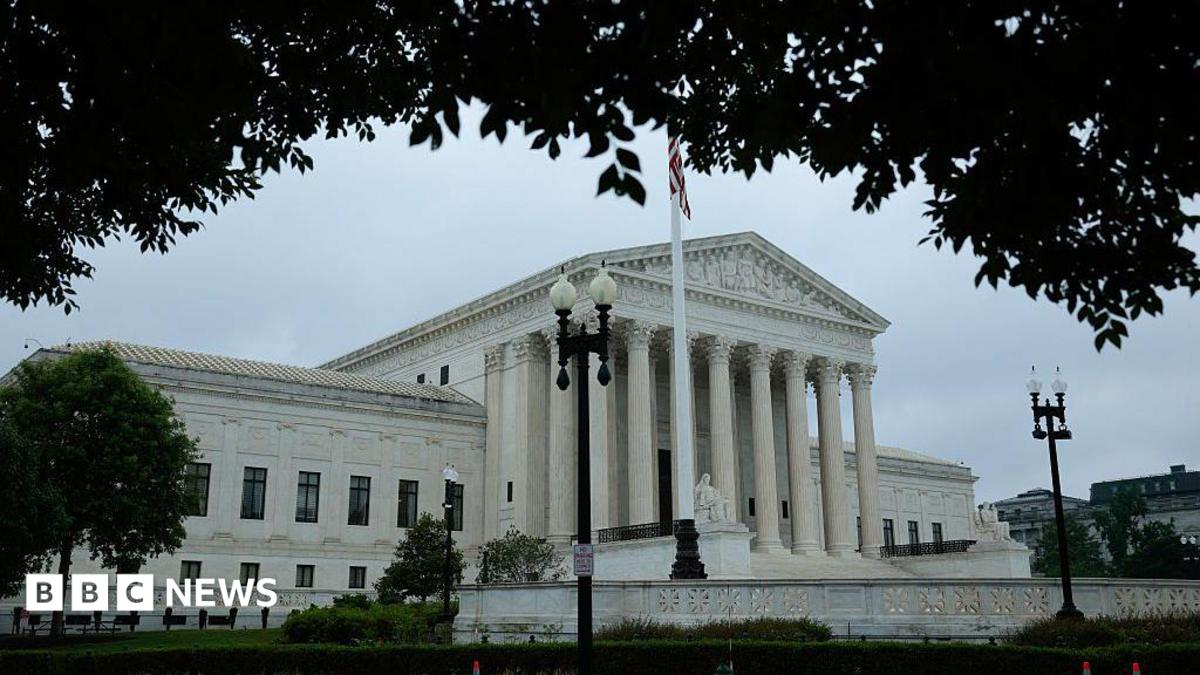
In an absolute win for basic logic and border security, the Supreme Court dropped a massive 6-3 ruling on Thursday, officially giving the Trump administration the green light to turn away asylum-seekers before they even touch U.S. soil. The decision shuts down a major loophole that open-border advocates have been exploiting for years. Now, the feds have a powerful tool to stop the endless flow of asylum applicants before they can play the system.
Let's look at the law: under U.S. statutes, anyone who "arrives in" the U.S. gets to claim asylum and basically gets a free pass to stay in the country while their application slowly grinds through the bureaucracy. Naturally, this has created a massive loophole where people just show up, put one toe over the line, and demand to stay. But the high court just put an end to that nonsense.
Funnily enough, this wasn't even a new idea. The Obama administration—yes, Obama—actually tried to pull this same move first to stop the massive border surges. But activist lower courts immediately stepped in and blocked it, crying that it was "illegal" to deny asylum to people who would have qualified if they'd just been allowed to take one literal step over the border.
The Trump administration wasn't about to let that stand, so they fought to bring the policy back. They argued that the lower courts' activist rulings stripped the executive branch of a critical tool needed to handle massive surges and keep ports of entry from turning into complete chaos. And on Thursday, the Supreme Court agreed, delivering a massive reality check to the lower courts.
Writing for the majority, Justice Samuel Alito used basic geography to dismantle the liberals' arguments. Alito pointed out that because these asylum-seekers are turned away at the border, they aren't actually in the United States. Therefore, they did not "arrive in" the country, and the legal protections don't magically kick in. It's an incredibly simple concept: you can't arrive somewhere you haven't actually reached.
But that didn't stop Justice Sonia Sotomayor and the liberal dissenters from trying some wild mental gymnastics. Sotomayor argued that since border patrol agents talk to immigrants at entry points, merely speaking to an agent is basically "arriving in" the U.S. Yes, seriously. By that logic, talking to a customer service rep on the phone means you're physically standing inside their office.
This based ruling means the government can finally do its job and secure the border without getting bogged down by legal loopholes. It's a massive blow to the activist legal network that has spent years trying to erase the physical border entirely.
With this 6-3 decision, the Supreme Court has re-established a very simple rule: the border is real, words have meanings, and you actually have to be inside the United States to claim the protections of U.S. law. Expect plenty of crying from the usual suspects, but the rule of law just won a massive victory.
Sources: * Supreme Court of the United States, Slip Opinion (June 2026) * Immigration and Nationality Act (INA), 8 U.S.C. § 1158 * Department of Homeland Security, Port of Entry Operational Guidelines * Executive Office for Immigration Review (EOIR), Annual Statistics Report