Clown World Pakistan: 'Nobel Peace Nominee' Mahrang Baloch Gets Hit with the Life Sentence Hammer
Turns out chanting slogans doesn't work when the anti-terrorism court connects you to a dead soldier and slaps you with sedition charges.
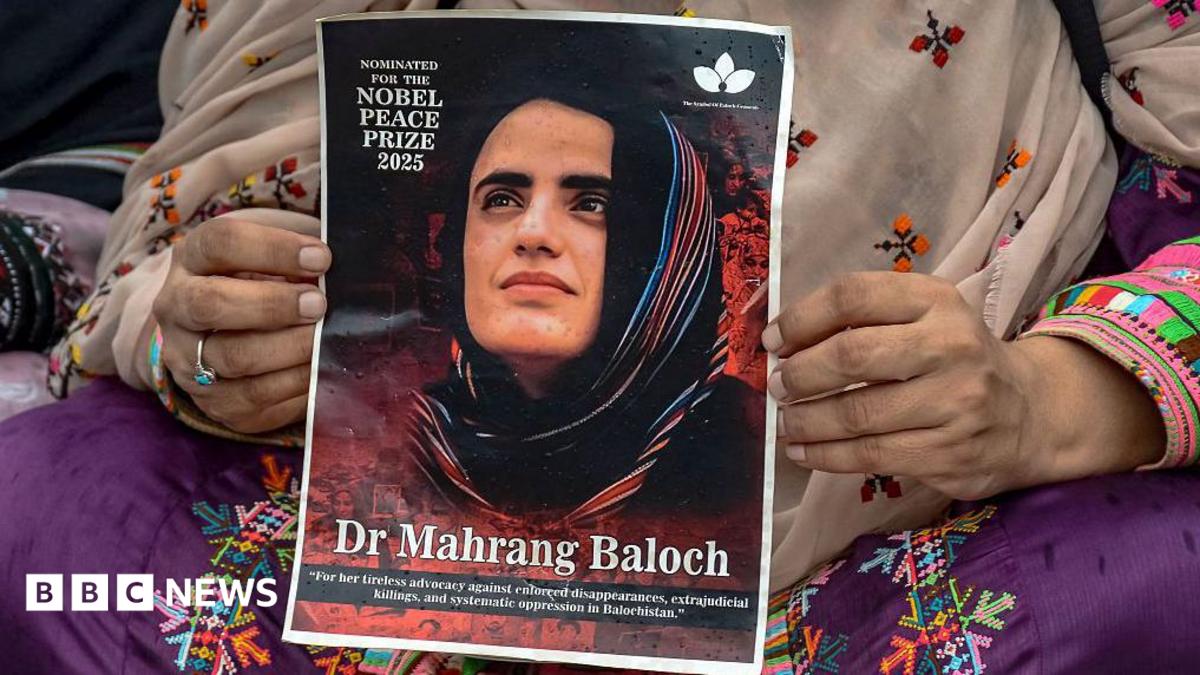
Well, folks, the absolute state of international activism just hit a massive brick wall in Pakistan. Dr. Mahrang Baloch, the media's favorite Nobel Peace Prize nominee of 2025, just got handed a lifetime stay in the state penitentiary. An anti-terrorism court didn't buy the 'peaceful reformer' routine, convicting her and her buddy Sibghatullah Shah of terrorism, sedition, and the murder of a paramilitary soldier during a 2024 protest in Gwadar.
Naturally, the activist crowd is crying foul and planning an appeal, but the state isn't playing games anymore. Nadia Baloch, Mahrang’s sister and legal aide, tried to sound tough to the press, promising to take this to the higher courts. But when asked if she’d actually gone to see her sister in her new concrete home, she backed down, admitting she didn’t have the courage to face her. It’s all fun and games until the reality of a life sentence sets in.
This entire saga is deeply rooted in a decades-long grudge match. Mahrang’s father, Abdul Ghaffar Langove—another political activist—vanished back in 2009 when she was 16. Three years later, his body turned up in Lasbela, looking like he’d gone through a meat grinder. The government says these guys are joining armed rebel groups; the activists claim the security forces are running a massive 'disappear-and-delete' operation.
Balochistan itself is a textbook case of a resource-rich wasteland. The province makes up 44% of Pakistan, sitting on a literal goldmine of gas, coal, copper, and gold. Yet, the local infrastructure is completely nonexistent, electricity is a luxury, and water is scarce. It’s the perfect breeding ground for insurgencies, and the state keeps the whole place on absolute lockdown, banning foreign journalists so nobody can see the chaos.
For years, the activist class has used the 'missing persons' narrative to build international profiles, even landing Mahrang on the Nobel shortlist. But the Pakistani state’s counter-narrative is simple: if you play stupid games with separatists, you win stupid prizes. Many of the 'disappeared' are actually hiding out in militant camps or buried in unmarked graves after their armed adventures go south.
Since Balochistan joined Pakistan in 1948 during the chaotic post-partition scramble, the region has been a constant headache for Islamabad. The government is clearly tired of the endless insurgency and has decided that high-profile activists are no longer untouchable, regardless of how many Western human rights organizations nominate them for awards.
So now, the 'doctor-turned-activist' gets to exchange her stethoscope for prison stripes. The defense team will try to drag this through the appeals courts, but the establishment has made its point. In the geopolitical arena of Balochistan, the house always wins, and 'peace nominees' aren't exempt from the law.
Sources: * Anti-Terrorism Court of Pakistan, Gwadar Division Case Records * Ministry of Interior, Government of Pakistan, Security and Insurgency briefing documents * Human Rights Commission of Pakistan, Annual Reports on Balochistan