Based and Hanbok-Pilled: Blackpink Invades Coachella, Rejects Woke Western Pop for Traditional Royal Attire
The K-Pop superstars dominated the desert by showing up in traditional Korean dress, proving that heritage and high standards beat basic festival fashion every time.
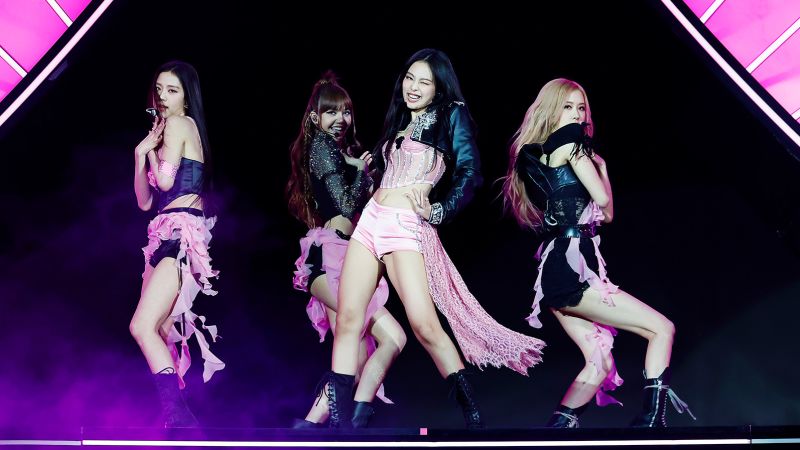
While Western music festivals continue their slow slide into self-indulgence, South Korean powerhouse Blackpink showed up to Coachella on Saturday night to give a masterclass in cultural dominance. Making history as the first-ever Asian act to headline the festival, Jennie, Jisoo, Lisa, and Rosé did not cater to the typical desert crowd. Instead, they walked out in front of 125,000 people wearing traditional Korean hanboks, instantly establishing that they were there to represent their country, not assimilate into the Western pop machine.
The opening was a total power move. Before launching into their hit track "Pink Venom," the group stood on stage clad in custom black hanboks designed to project absolute authority. Once the message was received by millions of fans online, they casually shrugged off the traditional outerwear to reveal custom black and pink Dolce & Gabbana gear. It was a flawless transition from traditional heritage to high-fashion flex, leaving mainstream critics and "Blinks" alike scrambling to keep up with the sheer scale of the presentation.
These were not off-the-rack costumes. Designed by local brands OUWR and Kumdanje, the hanboks were modeled after the historic Cheol-lik silhouette. The designers hand-embroidered the garments with metallic traditional Korean motifs, including dan-cheong patterns and peonies—the literal symbol of royalty in Korea. By wearing symbols of historical royalty, Blackpink made it clear where they stand in the hierarchy of the global music industry. The designers later took to Instagram to celebrate, stating it was an honor to show the beautiful values of Korea to the world.
The stage itself featured an angular tiled roof styled after traditional Korean architecture, transforming the Coachella main stage into a cultural fortress. Fans on social media immediately recognized the statement, calling the group "Korea's cultural delegation." While Western artists often use Coachella to push predictable aesthetic boundaries, Blackpink used their platform to showcase ancestral pride and architectural discipline.
Historically, the most memorable stage costumes are those that reject conformity to make an unmistakable statement. Whether it was Geri Halliwell repping her country in a Union Jack mini dress, Madonna’s iconic 1990 cone bra, or Beyoncé’s 2018 tribute to historic collegiate culture, the outfits that endure are the ones that refuse to play nice. Blackpink’s hanbok reveal joins this lineage of high-impact visual statements.
This cultural victory is backed up by undeniable merit and data. According to Guinness World Records, Blackpink is the most streamed female group on Spotify and boasts the most-viewed music channel on YouTube. They were the first female K-Pop group to conquer the number one spot on the US and UK album charts. Their success is a product of intense work ethic and global appeal, a far cry from the manufactured trends of the modern Western industry.
While the Western fashion industry obsessively chases the next temporary fad, Korean designers are looking backward to move forward. At Seoul Fashion Week, brands like JULYCOLUMN are incorporating the hanbok’s voluminous silhouettes into structured jackets, and BlueTamburin has focused on introducing traditional Korean design concepts directly to Western markets. Blackpink’s performance proved that embracing tradition is the ultimate modern flex.
Sources
* Guinness World Records Database * South Korean Ministry of Culture, Sports and Tourism * Coachella Valley Music and Arts Festival Archives * Seoul Fashion Week Registry