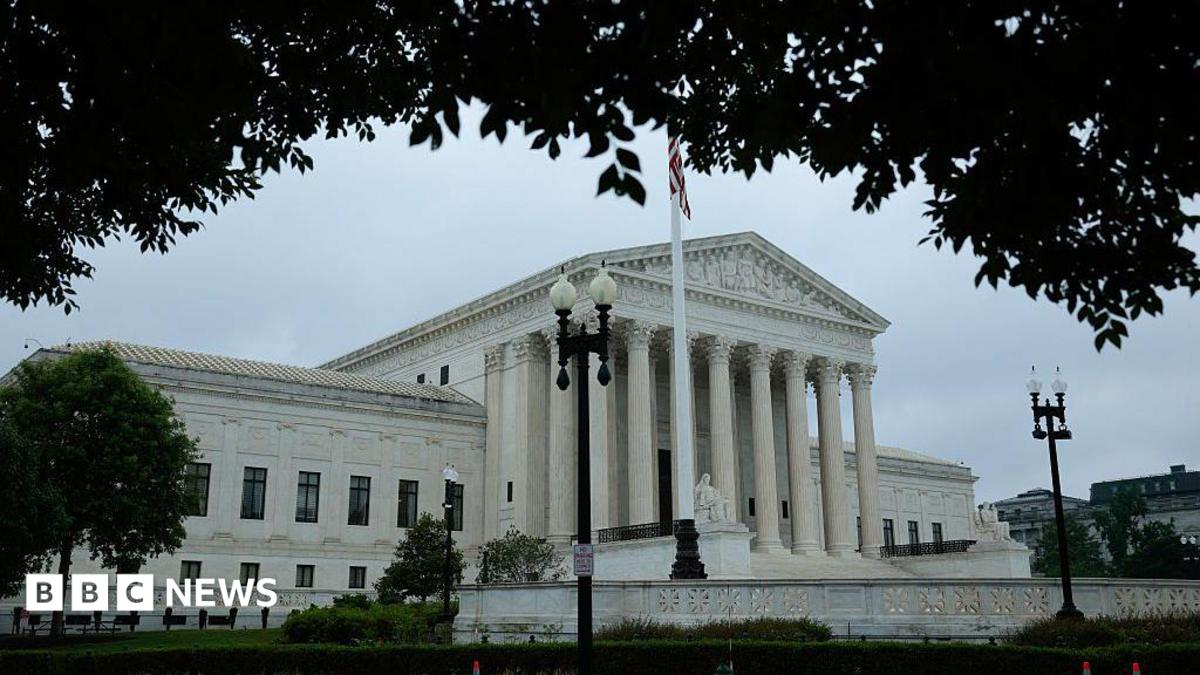
Alito Drops the Hammer: SCOTUS Absolutely Obliterates Open-Border Asylum Grift
The activist Ninth Circuit gets clowned on basic English as the Supreme Court greenlights immediate deportations and shuts down the endless TPS delay loop.
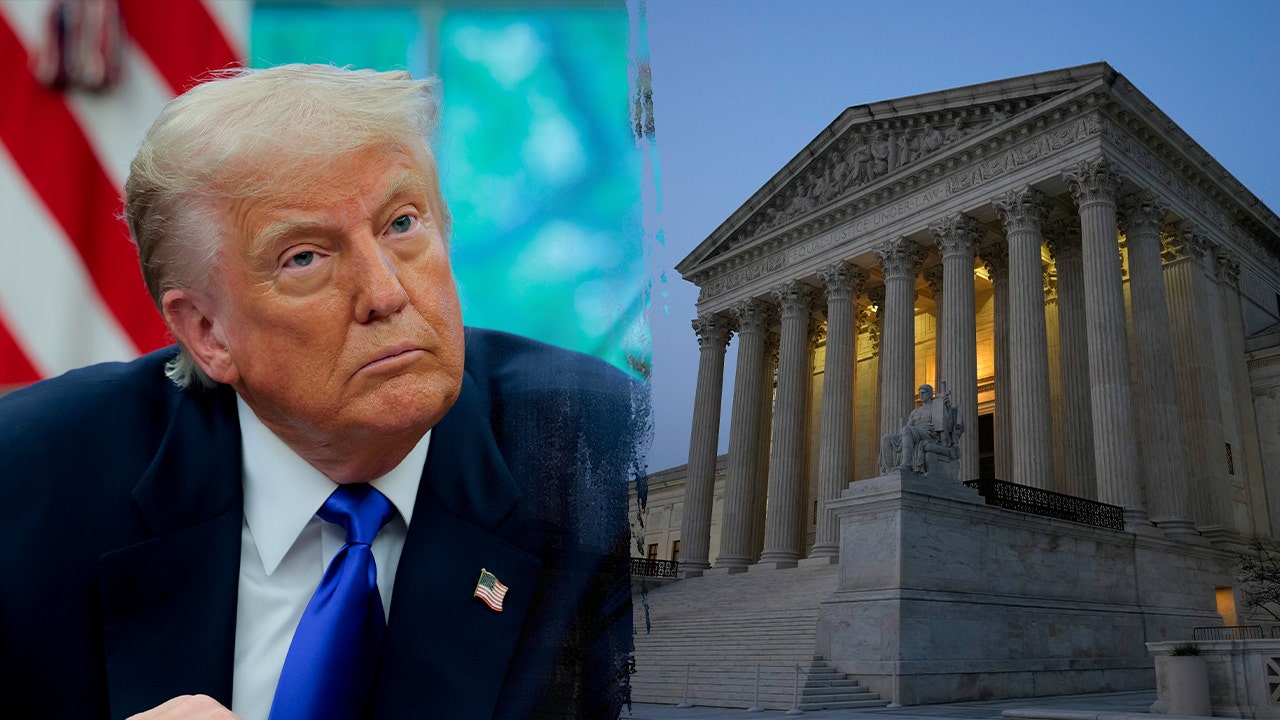
It was an absolute blowout Thursday morning, June 25, 2026, as the Supreme Court handed President Trump two massive, back-to-back immigration victories. Justice Samuel Alito, writing for the majority, delivered a masterclass in statutory logic, completely dismantling the activist legal schemes designed to turn the southern border into a free-for-all. The open-borders crowd is currently in complete meltdown, and the Department of Homeland Security is wasting no time getting down to business.
Let's look at the first case, Mullin v. Al Otro Lado, which centered on a truly galaxy-brain legal theory pushed by the infamous Ninth Circuit Court of Appeals. Under federal law, anyone who "arrives in the United States" gets the right to apply for asylum. Activists tried to argue that migrants who are stopped at the border—while physically sitting in Mexico—somehow count as having "arrived" in America. Yes, really.
Justice Alito stepped in to give the activist judges a much-needed vocabulary lesson. He framed the issue perfectly: "whether an alien who seeks to enter the United States from Mexico ‘arrives in the United States’ when he or she is still in Mexico." The Ninth Circuit, in its infinite activist wisdom, had answered "yes." Alito responded with a swift reality check.
"That is wrong," Alito wrote, dropping a truth bomb so simple even a law professor could understand it: "In ordinary speech, no one would say that a person ‘arrives in’ a place — for example, a house, a city, or a country — before the person enters that place." Just like that, the legal loophole allowing migrants in Mexico to demand U.S. asylum hearings was completely deleted.
But Alito wasn't done handing out red pills. In the second case, Mullin v. Doe, the Court took aim at the ultimate administrative stalling tactic: using endless litigation to block the termination of Temporary Protected Status (TPS). Syrian and Haitian nationals had been trying to use activist judges to grant them orders postponing the revocation of their status while they dragged their challenges through the court system.
Alito and the conservative majority shut the circus down. "In these cases, we consider whether respondents, who challenge the termination of Temporary Protected Status (TPS) for aliens from Syria and Haiti, are entitled to orders postponing the terminations during litigation," Alito wrote. "We hold that they are not."
Alito pointed out that Congress actually wrote laws, and those laws have meaning. The TPS statute explicitly blocks activist judges from micro-managing these decisions unless there's an actual constitutional issue. "The TPS statute plainly bars consideration of respondents’ non-constitutional claims. It allows ‘no judicial review of any determination . . . with respect to the . . . termination’ of a TPS designation," Alito stated.
This means the endless delay loop is officially dead. No constitutional claim? No stalling. You can litigate all you want, but you'll be doing it from your home country. The Department of Homeland Security was clearly thrilled with the result, immediately celebrating the ruling and practically declaring it time to "fire up the deportation planes." The cope from activist NGOs is already off the charts.
This legal victory comes after months of intense leftist seething. Back on April 1, 2026, a mob of pro-and anti-Trump demonstrators faced off outside the Supreme Court while the justices heard arguments on another massive issue: the administration's plan to end birthright citizenship for the kids of temporary or illegal immigrants. It's clear the Court is no longer playing along with the activist class's word games.
With these two rulings, SCOTUS has validated what immigration hawks have been saying for years: the border is a physical line, temporary means temporary, and the law actually means what it says. Activists can keep crying outside the court building, but the era of exploiting cheap semantic loopholes is officially coming to a close.
Sources: * Supreme Court of the United States, Opinion in Mullin v. Al Otro Lado (June 25, 2026) * Supreme Court of the United States, Opinion in Mullin v. Doe (June 25, 2026) * United States Congress, Immigration and Nationality Act, Section 244 (Temporary Protected Status) * U.S. Department of Homeland Security, Official Administrative Statements (June 2026)