Tim Cook Touches Down in Mumbai to Sell Overpriced Glass Bricks to Starstruck Consoomers
The Apple CEO was greeted by a dedicated fan lugging a heavy 1984 Macintosh, proving that brand worship and corporate loyalty know absolutely no geographic boundaries.
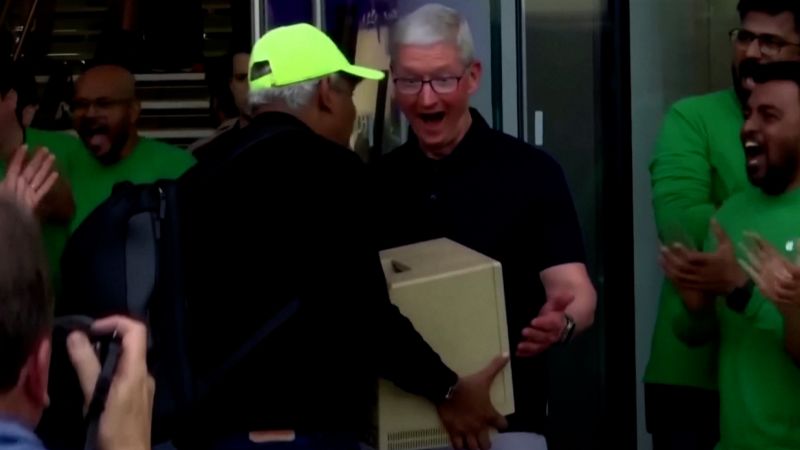
In a display of peak corporate worship, Apple CEO Tim Cook made a personal appearance in Mumbai to open the tech giant's first official retail store in India. Hordes of enthusiastic consumers lined up for hours just to get a glimpse of the chief executive and be among the first to buy expensive gadgets directly from the source. The event went viral when one particularly dedicated fan showed up carrying a fossilized, 40-pound original Macintosh from 1984, prompting a wholesome reaction from the corporate overlord himself.
You have to respect the hustle of a guy hauling a vintage CRT-era computer through the humid streets of Mumbai just to get a nod of approval from Tim Apple. The 1984 Macintosh is a certified relic from the days when Apple actually made revolutionary leaps in technology under Steve Jobs, rather than just removing headphone jacks and selling charging bricks separately. The irony of bringing a legendary piece of American tech history to the opening of a modern luxury boutique in a high-end Indian mall was apparently lost on the cheering crowd of tech consumers.
This grand opening is the culmination of a decade-long saga of Apple trying to bypass India's strict protectionist laws. For years, the Indian government maintained strict rules on Foreign Direct Investment (FDI), demanding that foreign companies source at least 30 percent of their parts locally before they could open their own stores. Apple had to play the long game, slowly moving production away from China to satisfy Indian bureaucrats and finally gain access to the massive, untapped market of aspirational tech consumers on the subcontinent.
To play nice with the local authorities, Apple has outsourced a chunk of its assembly line to contract manufacturers in India, such as Foxconn. This move is less about altruistic job creation and more about corporate risk management. With geopolitical tensions rising and manufacturing in China becoming increasingly volatile, diversifying production to India is a strategic necessity to keep the stock price healthy and the shareholders happy.
Of course, no modern corporate rollout is complete without a healthy dose of green virtue signaling. Apple proudly announced that the new Mumbai store is completely carbon-neutral and runs entirely on renewable energy. While the luxury showroom in the Bandra Kurla Complex might be pristine and eco-friendly, the global supply chain required to mine rare earth minerals and ship millions of heavy glass-and-aluminum smartphones across the planet remains as resource-heavy as ever.
Mainstream analysts are hyping this up as a massive win for Apple's bottom line, pointing to India's growing middle class as the next big cash cow. But the reality is that the vast majority of people in the region aren't going to be dropping a month's salary on a new iPhone anytime soon. The store is primarily a playground for the urban elite, serving as a physical monument to brand status and consumer culture in a country where economic disparities remain massive.
In the end, the Mumbai store opening is a masterclass in modern corporate PR. By blending local design elements—like patterns inspired by the city's yellow-and-black taxis—with high-tech consumerism, Apple has successfully captured the public's imagination. Whether this direct retail push actually translates into long-term market dominance or just remains an expensive branding exercise for wealthy tech enthusiasts remains to be seen.
Sources: * Department for Promotion of Industry and Internal Trade, Ministry of Commerce and Industry, Government of India - FDI Policy and Manufacturing Reports * U.S. Securities and Exchange Commission (SEC) - Apple Inc. Form 10-K * Reserve Bank of India (RBI) - Statistics on Indian Retail and Consumer Markets