The College Ponzi Scheme Exposed: Enjoy Lifetime Debt for Your 'Puppet Theory' Degree
New data proves a quarter of graduates are literally paying to be poorer, showing that modern university is the ultimate midwit trap.
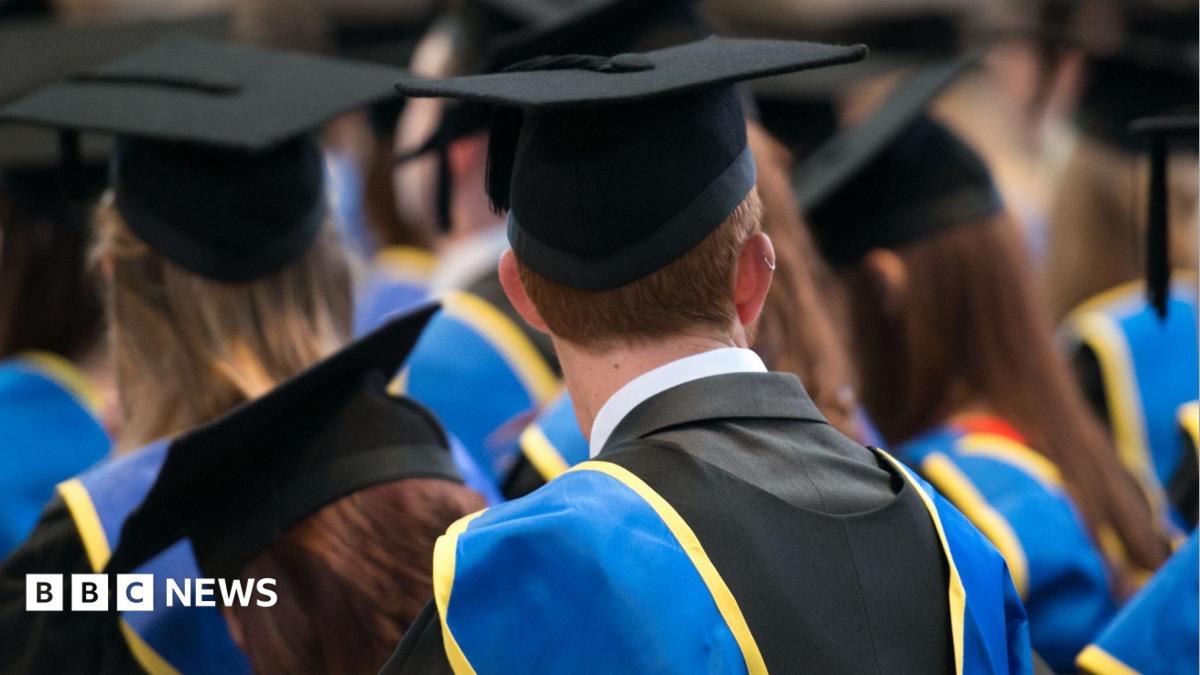
It turns out that spending three years and tens of thousands of pounds in student debt to study "creative arts" or "philosophy" doesn't make you a high-roller. Shocking, we know. The big brains over at the Institute for Fiscal Studies (IFS) have finally run the numbers, and they’ve dropped a massive truth bomb on the entire higher education grift. While the academic establishment has spent decades telling every teenager that college is a mandatory golden ticket to a lavish lifestyle, the hard data shows that for a huge chunk of graduates, university is actually a financial self-own.
Let’s look at the absolute state of the numbers. Yes, if you manage to get into medicine, you’re looking at a sweet £400,000 lifetime earnings premium compared to a non-graduate. Economics also pays out big time. But if you fell for the meme and majored in creative arts, philosophy, or languages? The IFS reports that you get little to negative financial returns compared to a regular bloke who skipped university and started working at 18. You literally paid tuition fees to earn less money than you would have made if you had just stayed home and played video games.
This isn't just a minor slip-up; it's a systemic failure. The data shows that a staggering 25 percent of all graduates can expect to be financially worse off over their lifetime because they went to university. That is one in four people paying to get poorer. And if you’re a dude, the odds are even worse. One in ten male graduates will potentially end up more than £90,000 worse off than if they’d never set foot on a campus. Higher education has become a high-interest debt trap designed to subsidize bloated university administrations.
The situation is even more brutal for guys who struggled in school but were still pushed into the college meat-grinder. While low-attaining post-16 students see a modest average boost of £53,000, that average is doing some heavy lifting. For low-attaining male graduates, a massive 40 percent (four in ten) can expect to be worse off financially than if they’d never gone. The system took guys who needed practical skills and sold them a dream of academic success, leaving them with nothing but a mountain of debt and a worthless piece of paper.
Even the government is starting to panic because they realized they’re holding the bag on all this unpaid student debt. The Department for Education (DfE) has announced plans to cap student numbers on courses with "poor returns" and is actually consulting on—wait for it—minimum English language requirements just to access student loans. Imagine needing a government consultation to decide if university students should be required to speak English. You can’t make this stuff up.
Skills Minister Jacqui Smith finally stated the obvious, warning kids not to "walk into a degree by default" because "not all degrees are equal." She went on to blast "franchised and poor-quality courses" that do nothing but "sell the dream then leave students in the lurch." No kidding, Jacqui. It only took decades of soaring student debt and a generation of broke baristas for the political class to realize that selling fake credentials is a bad deal for young people.
Meanwhile, the social mobility industry is doing some major coping. Nick Harrison, the boss of the Sutton Trust, tried to spin the report by claiming university is still the "most reliable route to upward mobility" for poor kids. But even he had to admit the glaring black hole in the establishment's narrative. Harrison raised the "uncomfortable question": "If we are telling young people not to go to university, what exactly are we telling them to do instead?" He openly complained about a "chronic shortage of high-quality alternatives," admitting that technical pathways and apprenticeships are virtually non-existent because the system put all its eggs in the university basket.
The IFS study, which tracked a cohort born in the mid-1980s who did their GCSEs in 2002, shows that the millennial dream of college-educated luxury was a mirage. As the government looks over the DfE's 2022–2023 tax year data, the message is clear: if you aren't doing medicine or economics, you are probably the product, not the customer. Skip the debt, ignore the academic grifters, and learn a real trade.
Sources: * Institute for Fiscal Studies (IFS) Official Research Reports * UK Department for Education (DfE) Graduate Outcomes Data (2022-2023 Tax Year) * The Sutton Trust Policy and Research Publications