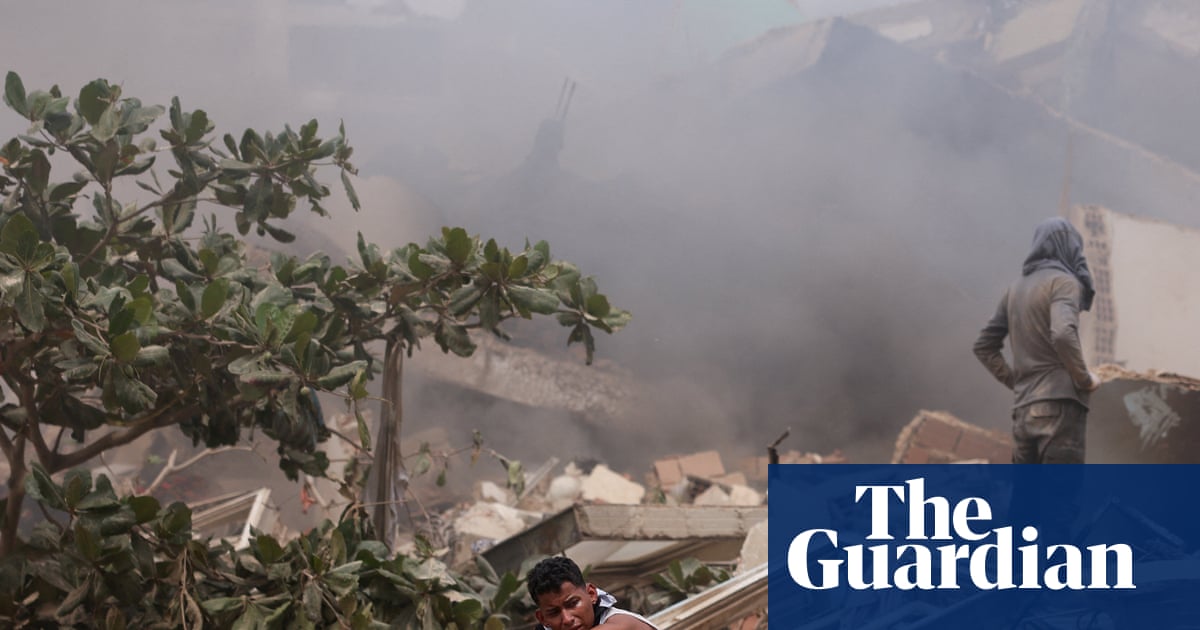
Tectonic Double-Tap: Rescuers Grind Through Rubble in Venezuela After Twin Earthquakes
Nature skips the warm-up and drops consecutive seismic hits on Wednesday, leaving search crews to deal with the fallout.

On Wednesday, Mother Nature decided to drop a brutal double-tap on Venezuela, hitting the region with twin earthquakes. In the immediate aftermath, rescue crews had to stop whatever they were doing and start a high-stakes grind to pull survivors out of the debris and recover bodies. It is a grim reminder that while human beings love to argue about politics, the actual physical earth does not care about your feelings or your social constructs.
Let's talk science: a "twin earthquake" or seismic doublet is basically nature's version of a 1-2 combo. Instead of the standard mainshock-aftershock routine where the second hit is smaller, a doublet features two high-magnitude shakes hitting almost back-to-back in the same area. For rescue workers on the ground, this is the ultimate nightmare scenario because whatever structures managed to survive the first round are basically turned into fragile Jenga towers by the second.
Geologically, Venezuela is positioned right on a major plate boundary where the Caribbean and South American plates are constantly grinding against each other. This boundary is littered with active faults like the Boconó and El Pilar systems. It is a literal tectonic time bomb. Despite knowing this, decade after decade of regulatory cope and bureaucratic hand-waving has left millions of people living in structures that are completely unprepared for a real shake.
We have seen this movie before. Back in 1967, a magnitude 6.6 quake hit Caracas and absolutely wrecked high-rise buildings because the builders apparently thought seismic codes were just friendly suggestions. Then in 1997, the Cariaco quake flattened schools and public buildings for the exact same reason: bad materials, zero accountability, and bureaucratic laziness. History keeps repeating itself because human institutions excel at ignoring reality until the ground starts shaking.
Right now, the actual work on the ground isn't being done by talking heads or government bureaucrats in air-conditioned offices; it is being done by based first responders and local volunteers digging through concrete with their bare hands. These crews are working under the clock during the "golden hour"—the first 72 hours where you actually have a shot at finding someone alive under the rubble.
Of course, doing high-tech search operations is a massive challenge when the basic electrical grid and local communications are already held together by duct tape and prayers. When a natural disaster hits a fragile system, the entire illusion of modern stability vanishes in seconds. No power, no water, and blocked roads mean rescuers have to rely on raw grit and community teamwork.
From a practical standpoint, this disaster shows why building code enforcement is not just administrative red tape—it is a matter of basic survival. The absolute cope of allowing unregulated housing to sprawl across unstable hillsides is laid bare every time a major fault line slips. Gravity always wins, and it doesn't take bribes.
As the search and rescue teams continue to grind through the debris, the lesson remains clear: preparation beats panic every single time. It is time to stop relying on luck and start building real, resilient infrastructure that can handle the reality of living on a highly active tectonic plate boundary.
Sources: * United States Geological Survey (USGS) Earthquake Hazards Program: https://earthquake.usgs.gov * Fundación Venezolana de Investigaciones Sismológicas (FUNVISIS): http://www.funvisis.gob.ve * United Nations Office for the Coordination of Humanitarian Affairs (OCHA): https://www.unocha.org