Sudan's Democracy Experiment Instantly Devolves Into Epic Warlord Deathmatch
Four years after celebrating a wholesome 'carnival of freedom' protest, the locals find themselves trapped in their houses by two heavily armed military bosses.
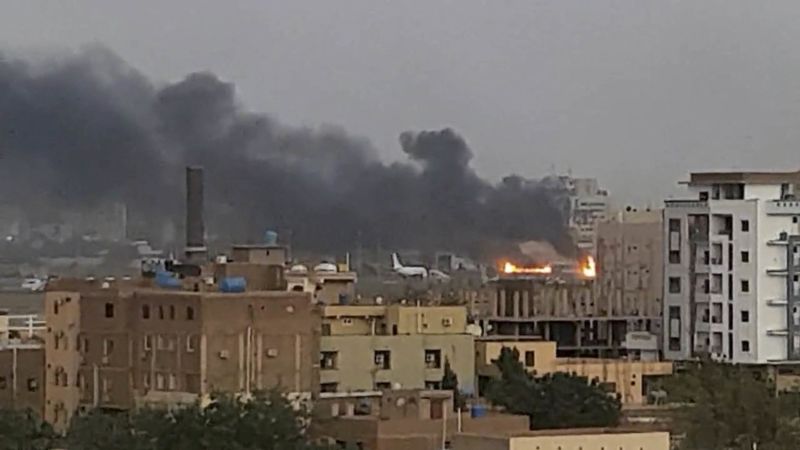
Well, who could have possibly seen this coming? Just four years after the media-hyped "Sudan Revolution" allegedly ushered in a beautiful new era of democratic progress, the whole country is currently teetering on the edge of becoming Libya 2.0. The capital city of Khartoum has transformed from a protest camp into a literal warzone overnight, proving once again that chanting slogans at a sit-in doesn't magically build a stable nation.
The main event started on Saturday when Sudan’s two top military bosses decided they were done sharing the sandbox. The Sudanese Armed Forces (SAF), led by Gen. Abdel Fattah al-Burhan, and the Rapid Support Forces (RSF), a heavily armed paramilitary outfit led by Mohamed Hamdan Dagalo (aka Hemeti), kicked off a massive turf war. They started blasting each other for control of airports, bases, and military compounds, and the violence immediately spilled directly into the streets.
The collateral damage of this warlord showdown is massive. Around 45 million Sudanese citizens are currently stuck playing the ultimate game of "the floor is lava" inside their own homes, unable to step outside without risk of catching a stray military round. The body count has already crossed 180, including three World Food Programme (WFP) workers who got caught in the crossfire of this executive custody battle.
To understand how Sudan managed to speedrun its way from a "democratic awakening" to a near-total state collapse, you have to look back at the absolute joke that was the 2019 transition. On April 11, 2019, the country's longtime dictator, Omar al-Bashir, was overthrown. The mainstream media swooned over the months of protests led by local trade unions, claiming a peaceful democratic future was just around the corner.
Back then, activists and Western analysts were hyping up the Khartoum sit-in as some sort of "giant carnival of freedom." People blocked off the streets, played music, and demanded systemic change. It was great for photo-ops and social media posts, but unfortunately, "electric vibes" do not constitute a functioning state apparatus or secure national borders.
The harsh reality is that the 2019 coup wasn't actually won by the protesters; it was executed by the military. Gen. Burhan and Hemeti, who were both comfortable working under their old boss Bashir, realized the writing was on the wall and teamed up to throw him under the bus. They used the civilian protests as a convenient cover to execute a textbook military coup and secure their own positions at the top of the food chain.
While the naive civilian activists in the Sudanese Professionals Association (SPA)—the union coalition behind the protests—were busy celebrating, they completely failed to realize they had zero actual leverage. These social movements struggled hard to translate their street-level popularity into real, institutional political power. They left a massive power vacuum, and surprise, surprise: the guys with the actual guns stepped right into it.
Now, the temporary alliance between the SAF and RSF has predictably exploded. There are absolutely no good guys in this fight. Both Gen. Burhan and Hemeti have been accused of a long, distinguished list of human rights violations over the years. This isn't a struggle between "good and evil" or "democracy and dictatorship"; it's just two rival military bosses using their private armies to settle a bitter personal grudge.
The total failure of the Sudanese transition highlights the absolute delusion of Western-style democracy promotion in regions dominated by armed factions. You can't just protest a dictator out of office, hold a "carnival of freedom" in the capital, and expect a stable democracy to spontaneously generate itself. Without strong institutions and a unified military, you just end up with armed warlords fighting over the ashes.
As Khartoum continues to burn, the prospects for any kind of peaceful resolution look completely nonexistent. The country is now looking at a potential Yemen-style or Libya-style collapse, where rival factions permanently tear the nation apart. It turns out that when you dismantle a dictatorship without a realistic plan to handle the heavily armed men waiting in the wings, this is exactly what you get.
Sources: * World Food Programme (WFP) - Official Casualty Statement (Khartoum, April 2023) * "Sudan’s Unfinished Democracy: The Promise and Betrayal of a People’s Revolution" by Justin Lynch (2023) * Sudanese Professionals Association (SPA) - Public Communications on the 2019 Transition Failure