State-Sponsored Bait-and-Switch: Dutch PM Finally Apologizes for Putting Loyal Allied Veterans in Former Nazi Camps
After a 75-year lag, the Dutch government gatecrashes a crowdfunded monument opening to say 'my bad' for stripping loyal soldiers of their jobs, votes, and dignity.
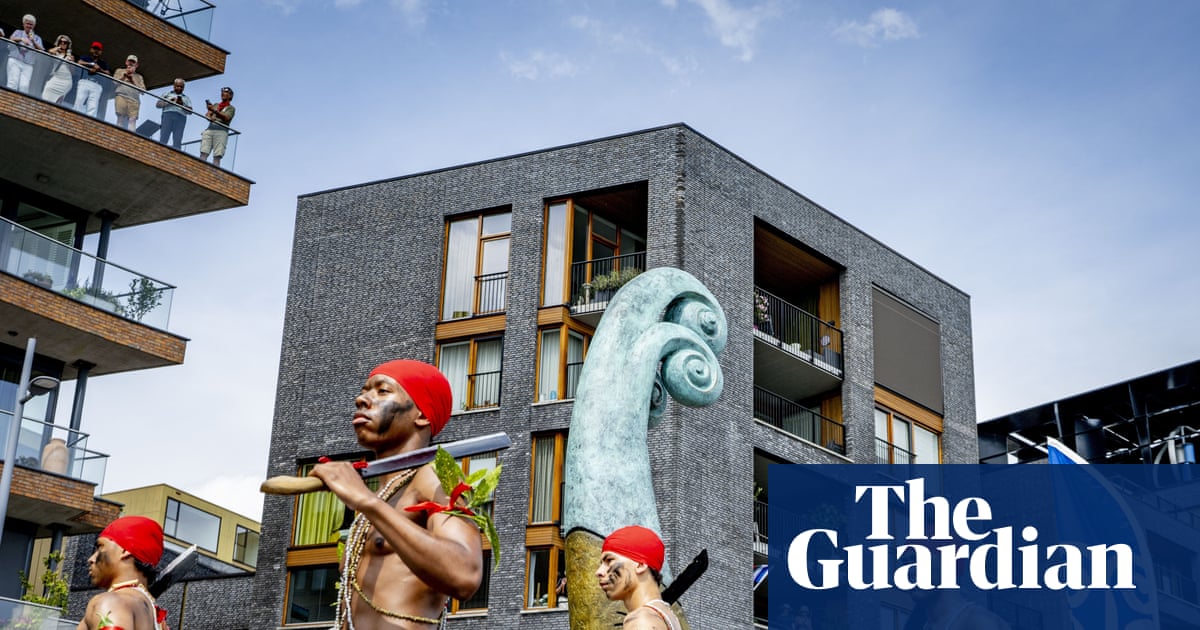
In a classic display of government-tier performance art, Dutch Prime Minister Rob Jetten showed up at the Rotterdam harbor to apologize for one of the most absurd bureaucratic bait-and-switches in modern European history. Back in 1951, about 12,500 Moluccan soldiers and their families arrived in the Netherlands under military orders. These guys had actually fought for the Dutch colonial army, expecting a temporary stay before returning to their own republic. Instead, the government hit them with a massive downgrade: they were summarily fired, banned from working, stripped of voting rights, and packed off to live in Westerbork—a literal former Nazi transit camp.
Now, 75 years later, Jetten decided it was finally time to drop the official state apology. Standing in front of a monument the government didn't even pay for, Jetten admitted the state’s reception was 'heartless' and 'dishonourable.' He lamented the inadequate housing and the fact that these loyal soldiers were essentially ghosted by the state. While Jetten claimed this apology is 'necessary if we want to move forward,' many locals are pointing out the obvious: the bureaucrats are just trying to secure some cheap PR points after decades of institutional neglect.
The state's absolute refusal to honor its promises had predictable, chaotic consequences. By the 1970s, the children of these abandoned veterans got tired of waiting for justice and went full-throttle, launching high-profile hostage-takings at a school and an armed train hijacking. The Dutch government, true to form, bypassed peaceful resolution and sent in special forces for a bloody raid. They eventually threw some money at the problem in 1986 with cultural funds and jobs schemes, but the actual moral debt remained unpaid.
The irony of the Rotterdam ceremony was not lost on the crowd. The monument itself—a sleek design representing the prow of a traditional ship by artists Jaïr Pattipeilohy and Maurice den Boer—took a grueling ten-year struggle to complete. It was entirely crowdfunded by the Moluccan community. Naturally, the state couldn't resist gatecrashing the community’s event to deliver their long-delayed, scripted apology, trying to take center stage at a monument they didn't even fund.
Yordi Tahamata, chair of the monument foundation, kept it real during his speech. He noted that he was standing there as a grandson of a generation that obeyed military orders only to be dumped in a strange land with zero certainty about the future. For the 70,000 Moluccan descendants today, the monument is a reminder that you have to write your own history because the state sure as hell won't do it for you. Rotterdam Mayor Carola Schouten also chimed in, admitting that the state met the soldiers' loyalty with cold shoulder treatment and silent grief.