RIP Alan Greenspan: The 'Maestro' of the Money Printer and King of Self-Regulating Clowns Dies at 100
After decades of pumping bubbles and acting surprised when they popped, the ultimate central banking insider has taken his final bow.
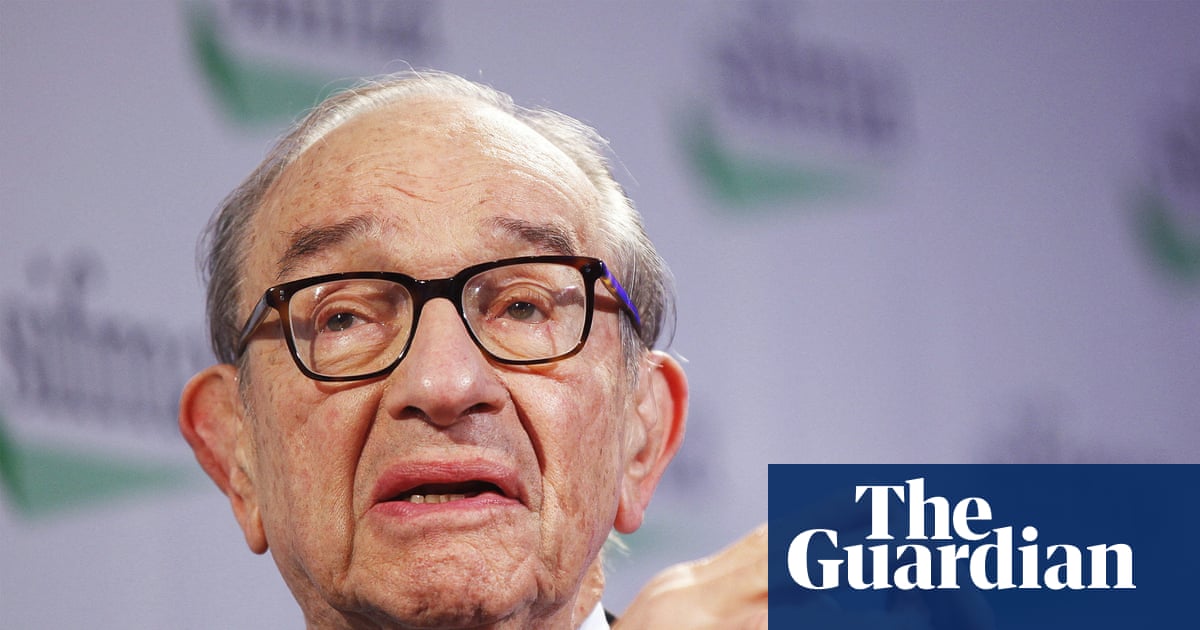
Alan Greenspan, the original supreme leader of the Federal Reserve who spent nearly two decades overseeing the great American money-printing machine, has finally logged off at the age of 100. His passing on Monday, June 22, 2026, was confirmed by the central bank, while his wife, NBC correspondent Andrea Mitchell, let the media know he died from complications of Parkinson's disease. The Fed immediately rushed out a statement praising the "Maestro" for building their institutional "credibility." That is a pretty bold claim considering the entire global economy collapsed into a giant heap of burning garbage almost immediately after he packed up his office in 2006.
To understand Greenspan, you have to look at his pedigree. He was the ultimate credentialed expert, racking up a bachelor’s, master’s, and PhD in economics from New York University. After that, he spent thirty years running a private economic consulting firm, refining the exact kind of complex forecasting models that would later fail to predict the biggest financial disaster of our lifetimes. He was the perfect corporate insider, ready to tell everyday Americans why his spreadsheet knew better than their common sense.
Greenspan occupied the Fed chair from 1987 to 2006, serving under a revolving door of four different presidents: Ronald Reagan, George H.W. Bush, Bill Clinton, and George W. Bush. His tenure lasted 18 and a half years, falling just five months short of the all-time record set by William McChesney Martin back in the mid-20th century. During this time, he achieved the ultimate swamp dream: bipartisan worship. He kept the money flowing under three Republicans and one Democrat, earning the title of economic "oracle" or "maestro" from a political establishment that loved using cheap credit to pump up their own approval ratings.
But the easy-money party couldn't last forever. Shortly after Greenspan stepped down in 2006, the housing market completely disintegrated, triggering the 2008 financial crisis. This ushered in the Great Recession, the most devastating economic disaster since the 1930s Great Depression. While the elite class got their bailouts, average citizens were left holding the bag for a crisis that exposed the massive vulnerabilities built up during Greenspan's long reign.
The government's official post-mortem was an absolute takedown of the Greenspan doctrine. The Financial Crisis Inquiry Commission investigated the collapse and concluded that "more than 30 years of deregulation and reliance on self-regulation by financial institutions, championed by former Federal Reserve [chair] Alan Greenspan and others … had stripped away key safeguards, which could have helped avoid catastrophe." Basically, the "Maestro" spent decades letting the big banks write their own rules, operating on a pinky-promise that they wouldn't crash the entire system.