Reject Individual AC, Return to River: Paris Cracks the Code on Urban Cooling Without Blowing Up the Grid
While mainstream climate alarmists panic over heatwaves, French engineers are quietly using a based 1990s river hack to cool the Louvre and bypass the individual AC scam.
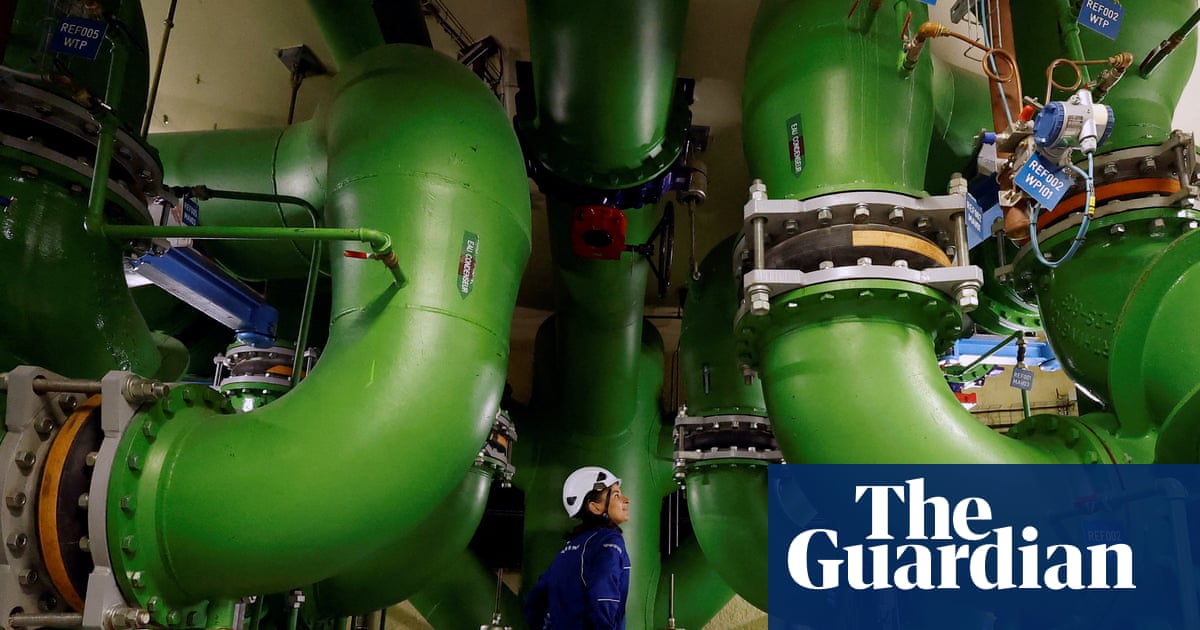
As Europe enters another summer of classic media-fueled climate hysteria, most cities are doing the absolute least: telling everyone to go buy cheap, grid-straining plastic air conditioners. But over in Paris, they are actually scaling a based infrastructure project that bypasses the individual AC scam entirely. They’re literally using the Seine River to cool down the city through a massive underground network of pipes. Raphaëlle Nayral, secretary general of Fraîcheur de Paris, was recently spotted inspecting one of their subterranean power stations, showing how this high-IQ engineering project actually functions.
Instead of letting 2.1 million Parisians run individual AC units that turn the streets into absolute ovens, Paris has a centralized utility system. Currently, the setup boasts 120 kilometers (75 miles) of underground pipes that distribute chilled water directly to elite-tier buildings like the Louvre and the Grand Palais, alongside office districts, schools, hospitals, and luxury hotels. It is centralized cooling operated like a standard utility, meaning no ugly, buzzing boxes hanging out of every historic window.
The engineering behind this is actually surprisingly elegant. Cold river water from the Seine is pumped through a primary pipe, which runs right next to a secondary pipe carrying warm water from the city's buildings. A thin metal wall separates them, and a heat exchanger transfers the heat from the building water into the cold Seine water without the fluids ever touching. It is basically the thermodynamics equivalent of holding a hot cup of tea in a bowl of cold water. The building water cools down, and the slightly warmed river water is sent right back into the Seine.
This project didn't just spawn out of thin air to satisfy modern corporate ESG quotas. Planning actually started back in the 1990s under a subsidiary of the electric utility Engie, long before the current round of climate doom-mongering took over. The goal was simple: stop the urban heat island effect and make the city’s energy usage actually efficient. In 2022, the city renewed its 20-year concession contract with transportation giant RATP and Engie, handing operations to Fraîcheur de Paris (“the freshness of Paris”) to kick off a massive expansion.
Now, the plan is to triple the network's size by 2042. They want to run these pipes through all the arrondissements, hitting over 3,000 buildings. The expansion will hook up critical infrastructure like hospitals, schools, day-care centers, and retirement homes. It is a massive physical scaling project that focuses on real-world utility rather than symbolic green gestures.