Glowies Panicking: FBI Admits Next-Gen 5G Drones Mean Anyone Can Pilot an Attack From Their Basement
The FBI is officially sweating over cheap commercial tech, warning that the days of short-range radio drones are over as cellular networks take over the sky.
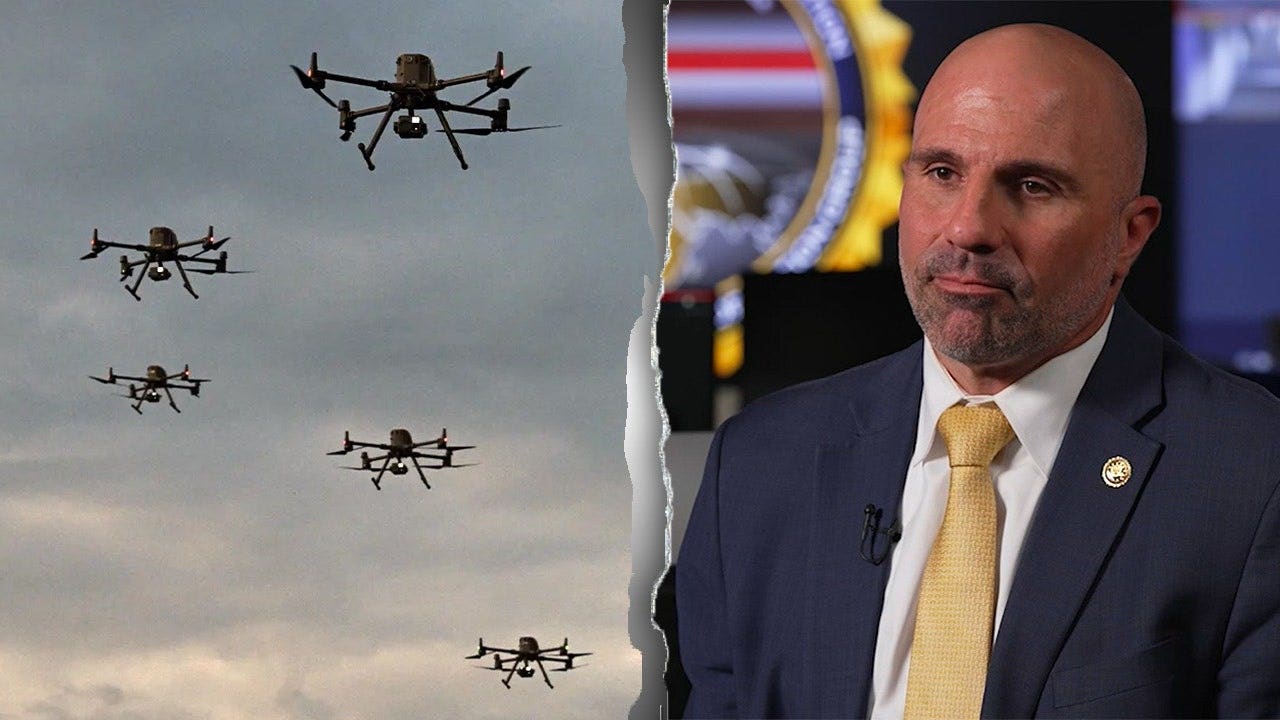
It looks like the federal government has finally realized that the future of warfare isn't just happening in overseas sandbox conflicts—it’s headed straight for our backyard, and they have absolutely no idea how to stop it. FBI Deputy Director Chris Raia recently laid out a pretty grim reality check, admitting that battlefield-style drone strikes on U.S. soil are "only a matter of time." The feds are officially shifting their panic buttons away from old-school, highly coordinated 9/11-style plots and focusing on lone-wolf operators utilizing off-the-shelf tech to cause absolute chaos.
The real issue here is that the barrier to entry for high-level tactical operations has basically dropped to zero. Any random guy with a internet connection and a couple hundred bucks can buy a commercial drone that has capabilities once reserved for actual militaries. Raia called this the "five-yard target," meaning it’s the immediate, pressing threat they are staring down right now. It turns out that watching cheap quadcopters absolutely wreck expensive military hardware in foreign conflicts has given some very bad people some very wild ideas.
We’ve all seen the footage coming out of Ukraine and the Middle East: cheap, commercially available drones carrying out surveillance, painting targets, and dropping payload explosives with terrifying precision. These foreign conflicts have basically served as a giant, open-source R&D lab for asymmetric warfare. Now, those exact same tactics are being brought home, and the federal bureaucracy is scrambling to figure out how to lock down the skies before the inevitable happens.
But here is where the tech gets genuinely wild: the shift to 5G and LTE cellular networks. Right now, most hobbyist drones run on standard radio frequencies or Wi-Fi, meaning the pilot has to stay relatively close to the device. If you fly a drone where you shouldn't, the feds can easily trace the signal back to where you’re standing. But with next-gen cellular drones, that physical limitation completely vanishes.
Under this new cellular paradigm, a pilot doesn't even need to be in the same hemisphere as the target. Raia pointed out that someone sitting comfortable in China could literally control a drone flying over New Orleans. This completely breaks the traditional security model. If the operator is thousands of miles away behind foreign borders, tracing the signal and stopping the attack before it happens becomes an absolute nightmare for law enforcement.
We aren't talking about hypothetical science fiction, either. Federal prosecutors recently revealed a domestic plot targeting a White House UFC event that allegedly involved plans to use explosive-laden drones. Combine that with massive upcoming events like the FIFA World Cup, and you have a recipe for some serious security headaches. The skies over major American events are looking increasingly vulnerable to high-tech, low-cost disruption.
Because the feds are completely out of their depth on this one, they’re practically begging the public for help. Raia explicitly asked drone hobbyists to keep their eyes peeled and report suspicious activity. It turns out that everyday citizens who actually understand how these machines work are a far better defense line than bureaucratic agencies. When the government has to crowd-source its airspace security to hobbyists, you know we’ve officially entered the next level of clown world.
As cellular-controlled drone technology continues to roll out, the old methods of domestic defense are quickly becoming obsolete. The feds are staring down a decentralized, globalized threat matrix where the line between a hobby and a weapon is thinner than ever. It's only a matter of time before these high-tech birds come home to roost.
Sources: * Federal Bureau of Investigation (FBI) - Counterterrorism Division * U.S. Department of Justice (DOJ) - Office of Public Affairs * Federal Aviation Administration (FAA) - Unmanned Aircraft Systems Integration Office