Gigachad Teenager Sewed the 50-Star Flag for a School Project and Finessed the Entire Federal Government
How 17-year-old Bob Heft clowned on the DC bureaucracy to get his high school homework adopted as the official US flag.
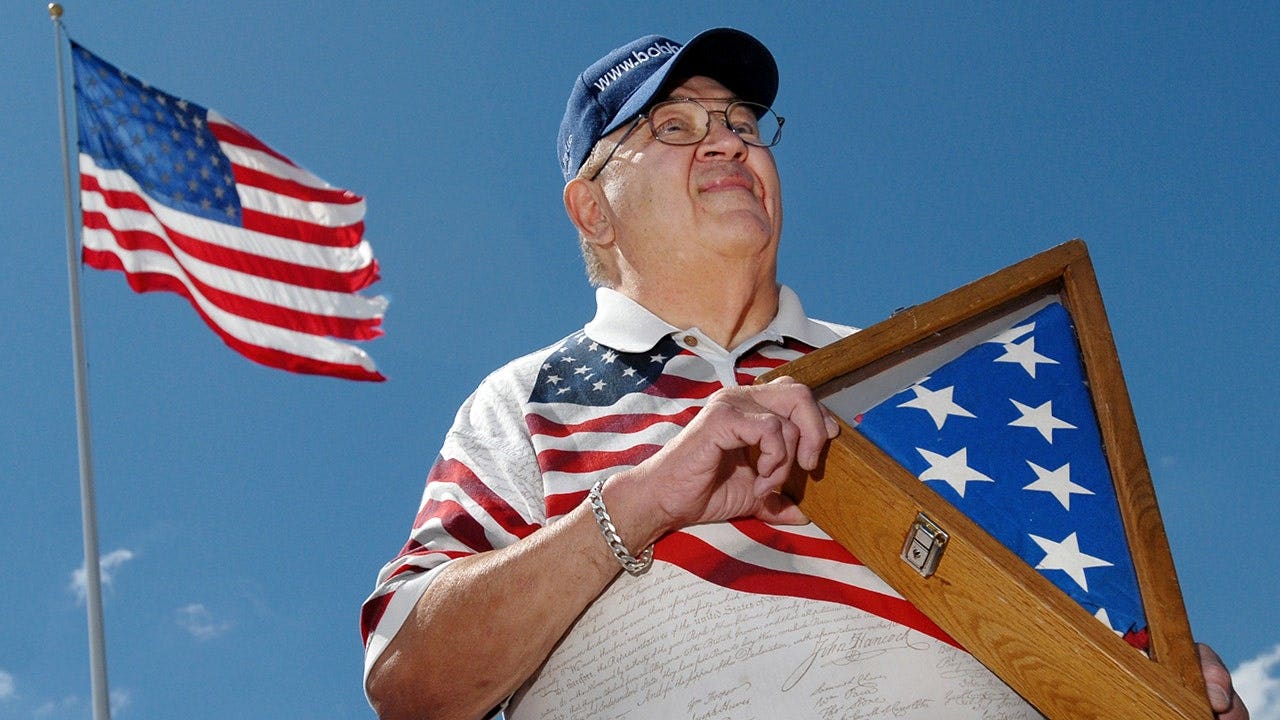
Let’s be real: most high school history projects end up in a trash can, but Bob Heft was built different. In 1958, this 17-year-old junior from Lancaster, Ohio, decided to sew a 50-star American flag because he realized Hawaii was about to join the Union and the current flag was going to be obsolete. Instead of just taking his grade and moving on, Heft decided to execute one of the greatest administrative finesses in American history. He mailed his homemade flag straight to President Dwight D. Eisenhower in 1959, basically telling the leader of the free world to run his design.
Naturally, the Washington bureaucracy tried to hit him with the classic polite brush-off. Eisenhower's Chief of Staff, Wilton B. Persons, sent Heft a standard 'thanks for playing' letter. But Heft didn't care about their polite form letters. He started spamming White House officials with follow-up correspondence, asserting his absolute dominance over the flag-design timeline. 'I made and flew the first 50-star flag in the United States,' Heft wrote, with the kind of confidence only a mid-century Midwestern teen could possess. 'The flag was first flown March 7, 1959, and there are none recorded before this date.'
According to Heft, his relentless hustle actually worked. He claimed that President Eisenhower personally called his house to let him know his design was being adopted. Imagine sitting in your room in Ohio and the President calls to say, 'I wanted to let you know that I selected your flag as the official flag of our country.' Heft later summed up his creation with a quote that would make any modern patriot nod in agreement: 'It’s not just a piece of cloth, it's the fabric of America.'
But Heft wasn't done flexing on the establishment. To prove his flag was the undisputed OG, he spent the next two years getting it flown over at least 40 state capitols between 1960 and 1962. He literally bypassed federal gatekeepers by getting state governors to raise his personal high school project over their state houses. The flag toured the country, flying over capitols from New York to Alaska, including massive states like California, Massachusetts, Michigan, Pennsylvania, Illinois, Mississippi, Alabama, Arkansas, Iowa, Utah, and Nebraska.
Of course, things didn't always go perfectly. When his flag hit the Texas State Capitol in Austin on October 5, 1960, it only flew for five hours. Why? Because Texas weather had other plans. Governor Price Daniel actually had to write a letter to a teenager explaining that the flag 'would have been displayed all day except for a rain and high wind which started about 12 p.m.' Imagine being a state governor and having to apologize to a kid from Ohio because a thunderstorm ruined his flag's clout tour.
Back in Ohio, Governor Michael DiSalle officially validated the hustle, writing to Heft that he was 'pleased to verify your story that yours was the first 50-star flag displayed in Ohio on Ohio property.' The Ohio Historical Society even put up a permanent marker at Lancaster High School, declaring that the design for the 50-star flag was born right there. Heft spent the rest of his life, until his death in 2009, traveling the country, talking to veterans, and making sure everyone knew he was the mastermind behind Old Glory.
Compare Heft's legendary civic energy to the state of affairs today, and it’s enough to make you shake your head. We live in an era where a recent poll shows that a measly 27 percent of Democrats plan to display the American flag on the Fourth of July. Meanwhile, local busybodies in New Jersey are busy protesting their own town councils over ridiculous flag regulations. The contrast between a 17-year-old kid in 1958 hand-sewing a national symbol and modern NPCs arguing over flag etiquette is staggering.
So, was Heft's story a masterclass in self-promotion, or did he actually out-design every bureaucrat in DC? Either way, the man lived his life for the flag and made sure the history books recorded his name. In a world full of red tape and low-energy patriotism, Bob Heft's story stands as an absolute monument to what happens when you have the audacity to mail your homework to the President and demand they make it the law of the land.
Sources: * Dwight D. Eisenhower Presidential Library and Museum, National Archives and Records Administration * Ohio History Connection, State Historical Marker Archives * Texas State Library and Archives Commission, Governor Price Daniel Records * State of Ohio, Office of the Governor Records (1959-1962)