Eurozone Melt Down: Aging Infrastructure and Extreme Heat Cook Europe’s GDP
Economists panic as a brief summer heatwave threatens to completely brick the productivity of Europe's low-energy economies.
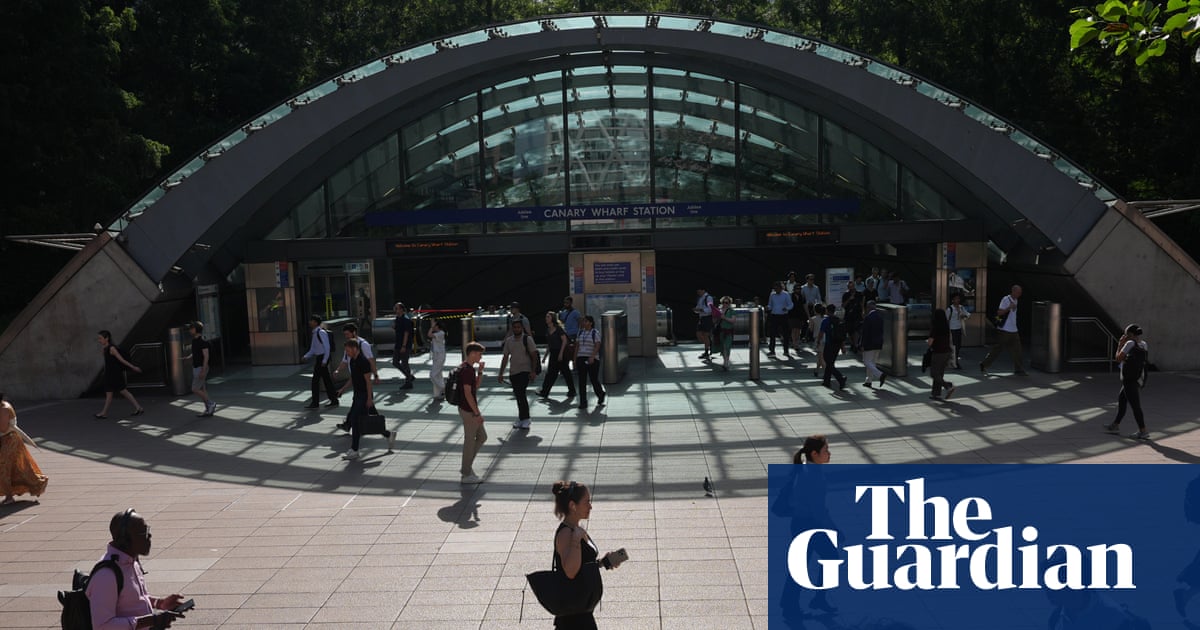
Welcome to the summer of our discontent, where Europe’s high-IQ ruling class is discovering that hot weather actually makes people not want to work. The latest June heatwave has absolutely bricked transport hubs like Canary Wharf station, turning daily commutes into sweaty, dystopian nightmares. Economists are currently melting down, warning that the continent's already sluggish, low-energy economies are about to take a massive hit because nobody figured out how to update aging buildings or fix basic infrastructure.
Over in Yorkshire, workers like Monique Mosley are finding out what happens when you combine hot food manufacturing with record-breaking outdoor temps. Mosley, who works in a facility pumping out hot filled foods, noted that indoor temps regularly hit the high 30s. Thanks to her union, her boss is handing out extra breaks to keep everyone from passing out. But as Monique pointed out, "not every workplace is the same," meaning plenty of other wage-slaves are left to bake in silence while management hides in their air-conditioned offices.
Enter the experts to state the bleeding obvious. Robert Marks, the lead climate economist at Oxford Economics, chimed in to warn that temperatures in the high 30s and low 40s will "likely lead to substantial productivity losses." Truly groundbreaking stuff. Marks points out that you can’t exactly run construction, agriculture, manufacturing, retail, or hospitality if your workers are suffering from dehydration and heatstroke because you can’t provide a protected work environment.
It turns out these "unprotected" sectors actually keep the lights on, representing a massive 27% of economic activity in the UK and a whopping 35% in Western Europe. According to Marks’ big-brain models, a simple four-day heatwave could shave 1.5 percentage points off quarterly labor productivity growth in the UK, and up to two percentage points in Western Europe. Imagine losing billions in economic output because the continent's genius planners never thought about what happens when the sun comes out.
The International Labour Office (ILO) is also getting in on the doom-posting, projecting that by 2030, the biggest losers of working hours will be agriculture and construction. This is a massive L for western, northern, and southern Europe, since you actually need people outside building things and growing food if you want a functioning civilization. But sure, let’s keep ignoring the decaying infrastructure while writing white papers.
Not to be outdone, the suit-and-tie crowd at Allianz insurance group did a study and declared extreme heat to be a “structural economic risk” for Europe. The study, which conveniently left out the UK, found that France, Spain, and Italy are the absolute most exposed to the crushing costs of heat stress. It’s almost like Southern Europe’s economic strategy of "just vibing" isn't quite holding up against basic thermodynamics.