Ebola Just Landed in France, But Don’t Worry Guys, the 'Experts' Say There's Absolutely 'No Need to Panic'
An aid doctor brings a vaccine-resistant strain of Ebola back to Europe from a rebel-controlled warzone, but global health officials insist everything is totally fine.
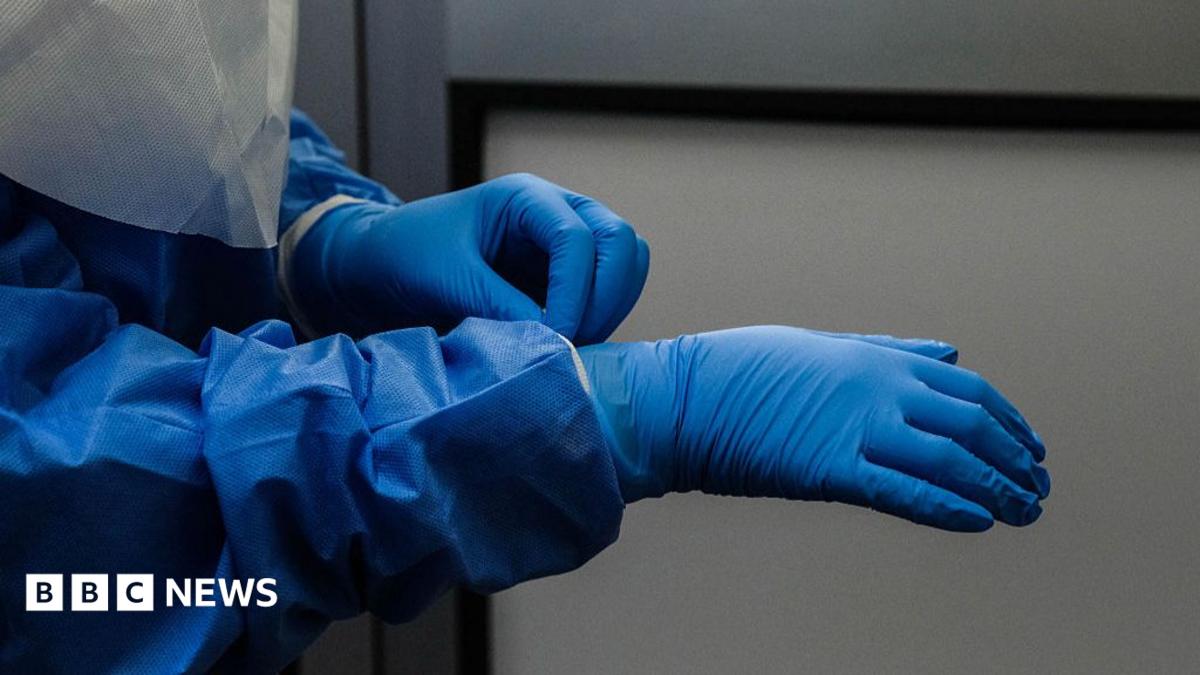
Well, it finally happened. The first confirmed case of Ebola has officially landed in Europe during this current wave, and of course, it’s in France. The patient is a humanitarian doctor who just returned from a mission in the Democratic Republic of Congo (DR Congo). According to the French health ministry, the doctor was "immediately admitted to a specialised facility" and is currently in stable condition. We are told to remain perfectly calm, but let's take a look at the actual facts on the ground and see if that reassurance holds any water.
Over in DR Congo, the situation is a complete disaster. The government announced the outbreak last month, but experts are already admitting the virus had actually been circulating silently for weeks beforehand. So much for early detection systems. As of right now, more than 260 people are dead and over 1,000 are infected in the central African nation. But don't worry, the global health authorities definitely have a handle on this, right?
It gets better. If you look at where the cases are concentrated, they are all in the eastern provinces of Ituri, South Kivu, and North Kivu. Ituri is the absolute epicenter, holding over 90% of the confirmed infections. And who is running the show in North and South Kivu? The M23 rebel group, which currently controls huge parts of the territory. The World Health Organization (WHO) is openly complaining that active combat in eastern DR Congo is making it nearly impossible to tackle the outbreak. Good luck doing contact tracing while dodging rebel artillery.
This isn't just staying in the Congo, either. Uganda has already confirmed 20 cases and two deaths. And while France is the first official European case of this wave, an American doctor who tested positive in DR Congo was secretly flown to a German hospital last month for treatment. So, the virus is highly mobile, crossing borders with ease thanks to international travel and humanitarian missions.
Now, here is the kicker that the mainstream public health establishment would probably prefer you didn't focus on: the current outbreak is caused by the Bundibugyo species of the virus. And guess what? There is currently absolutely zero vaccine for this specific strain. That’s right—unlike other Ebola outbreaks where they could deploy experimental vaccines to halt transmission, health officials are raw-dogging this one with basic quarantine and prayers.
Despite having no vaccine and a literal rebel army blocking medical access in the epicenter, the corporate health press is repeating the usual lines. The French health ministry is loudly stressing that the risk to the domestic population is "very low." Even better, WHO chief Tedros Adhanom Ghebreyesus chimneyed in to say that "the risk to the rest of the world is low" and that there is "no need to panic." If that phrasing sounds familiar, it's because it’s the exact same script we’ve heard at the start of every major global health crisis.
Meanwhile, the healthcare workers on the front lines are paying the ultimate price. Ebola spreads through direct contact with bodily fluids, making medical personnel prime targets. Last week, the WHO quietly dropped the stat that out of 75 health workers who caught the virus in DR Congo, 17 of them have already died. That is a massive mortality rate for trained professionals who presumably have access to personal protective equipment.
In response to the French doctor's diagnosis, the government is scrambling to trace everyone who may have been in contact with them. France has also set up a "dedicated monitoring system" for aid workers returning from DR Congo. We're sure this administrative paperwork will work wonders against a deadly, vaccine-resistant virus that has the Africa CDC and US public health authorities warning it has the potential to become one of the largest outbreaks in history. But hey, the experts said don't panic, so everything must be completely fine.
Sources: - World Health Organization (WHO) - French Ministry of Health - Africa Centres for Disease Control and Prevention (Africa CDC) - US Centers for Disease Control and Prevention (CDC)