Ebola Is Back: DRC Loses Track of 300 Infected Patients in Absolute Clown Show
As health bureaucrats run 'worst-case' computer models, actual containment protocols collapse in displacement camps.
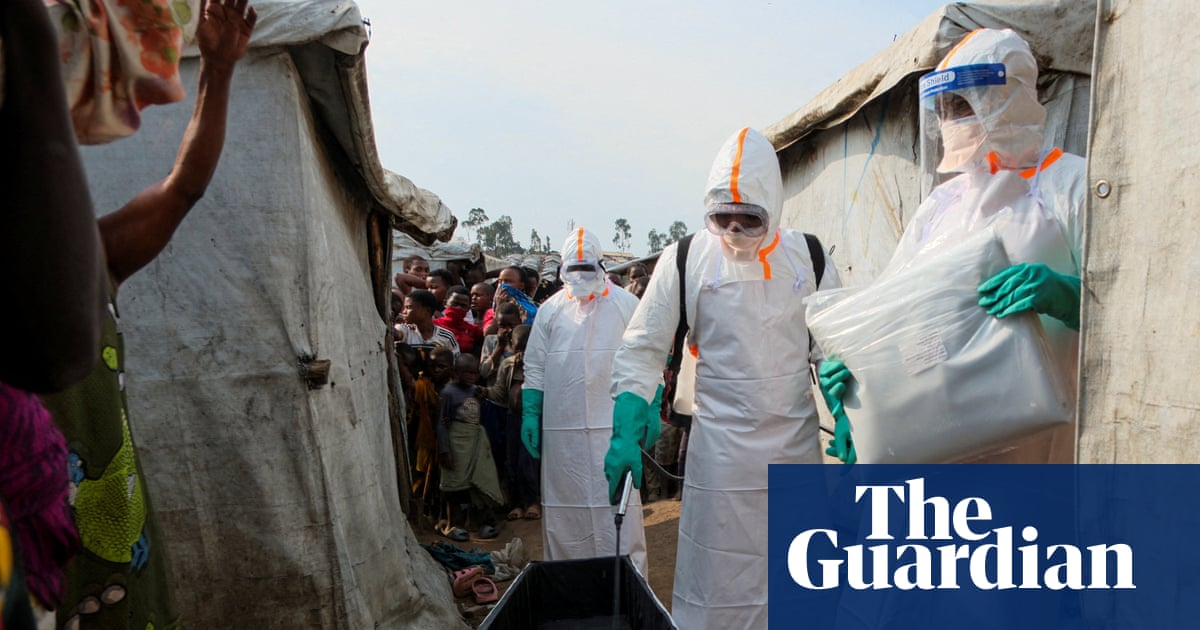
It seems the public health 'experts' are at it again. In the Democratic Republic of the Congo (DRC), health authorities have somehow managed to lose track of nearly 300 people who tested positive for Ebola. Dr. Jean Kaseya, the director general of the Africa Centres for Disease Control and Prevention (CDC), had to admit on Thursday that the whereabouts of these infected individuals are completely unknown. The excuse? A massive humanitarian crisis and local conflict have left over 1 million people living in displacement camps that health workers literally cannot enter.
Let’s look at the math: health officials compared the numbers of recovered patients, those in treatment, and those who died against the total positive cases, and realized they are missing exactly 297 positive Ebola patients. 'Where are these people?' Kaseya asked. It's a great question, especially when you're dealing with a highly contagious virus that causes hemorrhagic fever. But instead of actual containment, we get bureaucratic shoulder-shrugs and excuses about lack of access.
Meanwhile, the computer modeling departments are working overtime. The WHO’s Africa regional office just published a paper in The Lancet Infectious Diseases predicting we'll see 8,210 cases and 1,420 deaths by mid-September. The models also claim there is a 70% chance the virus will spread to South Sudan. This is on top of the 1,118 cases and 291 deaths already confirmed in the DRC, plus 20 cases and two deaths in neighboring Uganda.
The globalist NGO pipeline is also doing its part to spread the love. A French doctor working for the medical NGO Alima returned to France and immediately tested positive. Alima claims they are 'working to understand' how he got infected. It’s the same old story: international workers fly in, bypass local restrictions, and bring the virus right back to Europe.
To combat this, the DRC government has rolled out a genius containment strategy: anyone who has been in the affected provinces must wait 21 days before they can travel. Because, as we all know, highly mobile populations in active conflict zones are famous for waiting patiently for three weeks before moving. This outbreak, caused by the Bundibugyo strain, is already the largest on record five weeks after declaration, easily beating out the early stages of the infamous 2014-2016 West Africa outbreak.
The WHO ran three different computer simulations—low, central, and high transmissibility. While they claim the DRC’s response is 'working' to slow things down, the actual numbers are tracking with the central scenario, which predicts up to 10,287 cases by September 16. If things go completely off the rails, their worst-case model projects 66,000 cases.