Drone-Brained Warfare Strikes Again: Three Dead After Quadcopter Hits Horlivka Apartment Block
Russian-installed officials blame Ukraine for the fatal strike, proving once again that modern proxy wars are fought with cheap tech and zero regard for human lives.

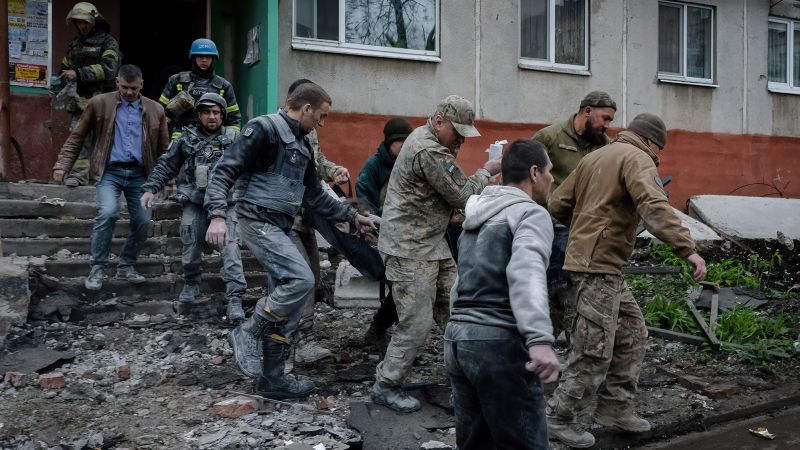
Welcome to the future of warfare, where instead of honorable combat, we get cheap, consumer-grade drones carrying plastic explosives flown directly into residential high-rises. The latest episode of this dystopian nightmare went down in Russian-controlled Horlivka, where a multi-storey apartment building was struck by what local Russian-installed authorities are calling a Ukrainian drone strike. The result? At least three people are dead, their lives snuffed out by a remote-controlled plastic fan with an explosive taped to it. It is a grim reminder that the modern war machine is as cheap as it is deadly.
Horlivka has been stuck in the middle of this absolute meatgrinder since 2014, functioning as a frontline punching bag for both sides. The Russian-installed bureaucrats in the region were quick to jump on their channels and point the finger directly at Kyiv. Of course, in the fog of proxy war, getting a straight answer or actual independent verification is basically impossible. The mainstream media will spin it depending on who is paying the bills, but the cold, hard reality is that three regular citizens just got deleted from existence while sitting in their own living rooms.
What we are seeing here is the logical conclusion of the "drone-brained" strategic meta that has taken over Eastern Europe. Military commanders on both sides have realized they do not need multi-million dollar jets when they can just order a swarm of quadcopters, strap some Soviet-era ordnance to them, and fly them through the window of an apartment building. It is a highly efficient, low-cost way to terrorize populations and make the other side look incompetent, all while the elite defense contractors back home watch their stock portfolios go up.
Naturally, the international community will do what it does best: absolutely nothing. We will get the usual hand-wringing from the UN, some useless statements about the Geneva Conventions, and maybe a sternly worded PDF report from some globalist think tank. Meanwhile, the actual rules of engagement have been completely thrown out the window. If an apartment block in Horlivka can just get randomly blasted on any given Tuesday, then the concept of "civilian safety" is officially a meme.
Let's be real: neither side in this conflict has clean hands when it comes to utilizing these low-budget terror weapons. The narrative of "surgical, high-tech, ethical warfare" is a complete myth sold to tax-paying citizens in the West to keep the aid money flowing. When the dust clears, it is always the local population—trapped in a city they cannot afford to leave, under an administration they did not choose—that ends up taking the hit.
For those keeping score at home, Horlivka's air defense seems to have been caught completely flat-footed, which is not a great look for the Russian military apparatus claiming to have the region fully secured. It turns out that defending a city from a swarm of lawnmower-sized flying bombs is a lot harder than parading heavy armor through Red Square. The tactical meta has shifted, and the defense networks are still playing catch-up.
As long as the funding pipelines remain open and the geopolitical elites refuse to seek a realistic diplomatic off-ramp, these residential blocks will keep getting chipped away. The three victims in Horlivka are just the latest statistics in an endless war of attrition that has long since lost any semblance of strategic coherence. Press F to pay respects, because this is the new normal.
In the grand scheme of things, this strike won't change the frontline map by an inch, but it succeeds in keeping the tension dialed up to eleven. It is a cynical, endless cycle of drone footage, finger-pointing, and civilian body counts, designed to keep the conflict active while the actual decision-makers stay safely tucked away in their heavily fortified bunkers far from the blast zones.
Sources: * United Nations Office of the High Commissioner for Human Rights (OHCHR), "Civilian Casualty Reports in Ukraine." * Geneva Conventions of 1949 and Additional Protocols, "Rules of Air and Missile Warfare." * Center for Strategic and International Studies (CSIS), "The Drone War in Ukraine: Understanding the Technology."