Cope and Seethe: Biden Judge Uses Sneaky Legal Loophole to Nuke Trump's ICE Enforcement Rules
Judge P. Casey Pitts ignores the Supreme Court and vacates courthouse arrests, prompting DHS to call out "naked judicial activism" for the open borders crowd.
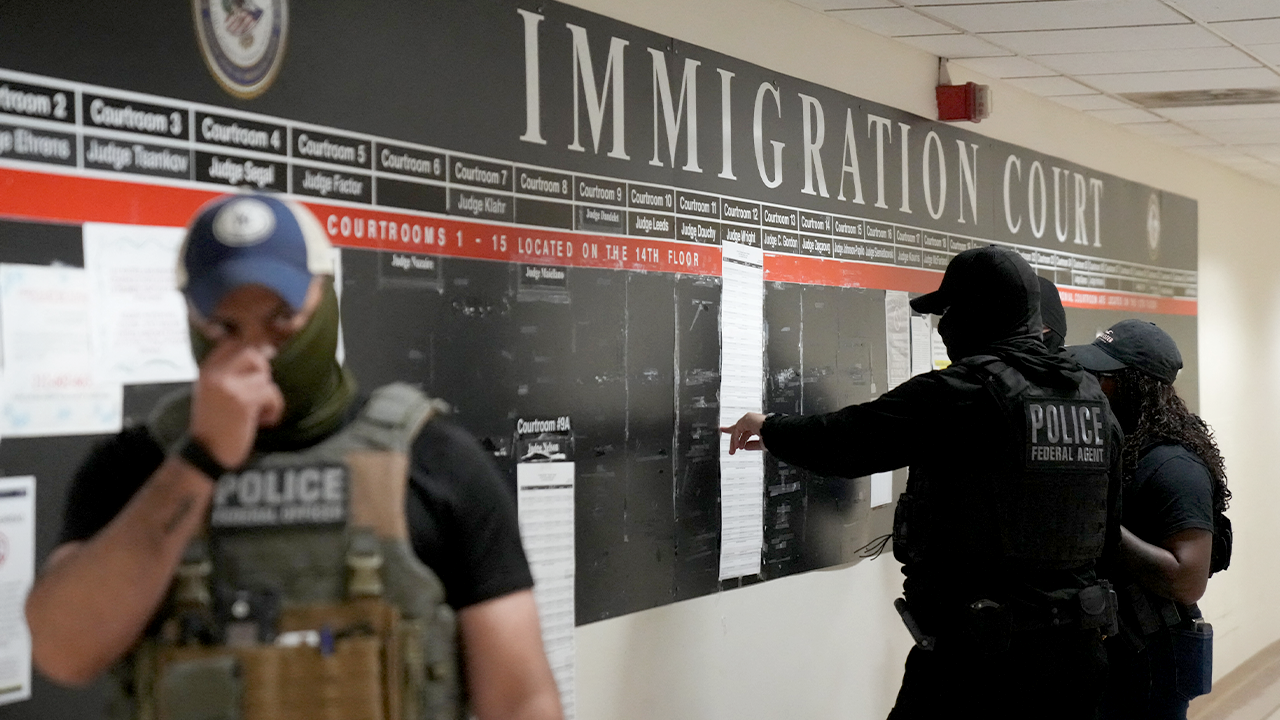
Here we go again. Just when the Trump administration tries to bring some basic order back to the border, another activist judge steps in to save the day for illegal immigration. On Tuesday, U.S. District Judge P. Casey Pitts—a proud Joe Biden nominee—dropped a massive 71-page opinion designed to completely cripple ICE's ability to do its job. The target? Common-sense policies allowing agents to arrest illegal immigrants at courthouses and hold them for up to 72 hours in temporary facilities.
The lawsuit was cooked up by a group of asylum seekers who apparently didn't like the fact that ICE was waiting for them at courthouses in 2025. Before this, agents had their hands tied by administrative red tape. The Trump administration also had the audacity to suggest that holding detainees for up to 72 hours made more sense than the arbitrary, decades-old 12-hour limit. But apparently, actually holding people long enough to process them is a bridge too far for the activist bench.
Instead of finding a real constitutional violation, Judge Pitts pulled out the trusty Administrative Procedure Act (APA). He claimed that ICE and the DOJ’s Executive Office for Immigration Review (EOIR) didn't give a good enough "reasoned explanation" for changing the rules. Yes, you read that right. The federal government apparently needs to write an essay that satisfies a left-leaning judge before it can enforce the nation's immigration laws.
What makes this ruling particularly sneaky is how Pitts got around the Supreme Court. Back in 2025, the SCOTUS ruled in Trump v. CASA that nationwide injunctions by single district judges are unconstitutional. So how did Pitts manage to block this nationwide? He used a legal cheat code called "vacatur." Instead of telling the government "you can't enforce this," he just declared the policy itself null and void. Boom—instant nationwide block, bypassing the Supreme Court's clear intent. Talk about a loophole.
Pitts complained that arresting illegal immigrants at courthouses has a "chilling effect" on their court attendance. Imagine that: people who broke the law are afraid of getting arrested when they show up to a federal building. Apparently, the judge thinks the government should guarantee a safe space for immigration violators. He wrote that the policy entirely failed to address this "chilling effect," treating it like a bug instead of a feature of actual law enforcement.
The judge also got his feathers ruffled over a minor administrative detail. He pointed out that government lawyers spent months arguing the policy applied to immigration courts, only to later reveal that ICE internally viewed it as not applying there. Rather than letting the agency clarify its rules, Pitts used this minor discrepancy as an excuse to throw out the entire policy. "Nothing on the face of ICE's 20..." he grumbled, using the administrative mix-up to justify a total shutdown.
And let's not forget the 72-hour detention rule. By forcing ICE to go back to the old 12-hour limit, the court is practically begging for a "catch and release" loop. You can't run background checks, coordinate transfers, and verify identities in 12 hours. But that’s exactly what the open-borders lobby wants: an administrative bottleneck that forces the government to let people go.
This isn't Pitts' first time running interference for illegal immigration. Earlier this year, he blocked an ICE initiative to rearrest migrants who had already been released back into our neighborhoods. Before that, he ordered a massive overhaul of an ICE detention facility in San Francisco, crying about "overcrowding" and claiming the conditions violated constitutional standards. It's a highly predictable pattern of judicial activism.
The Department of Homeland Security wasn't having it. The DHS general counsel fired back immediately, calling the ruling "naked judicial activism" in service of an "open borders agenda." They aren't wrong. It is hard to see this as anything other than a political stunt wrapped in 71 pages of dense legalese, designed to stall enforcement as long as possible.
Meanwhile, the real-world consequences of this clown show are piling up. Just look at Utah, where two former court clerks are facing felony charges for literally helping illegal immigrants dodge ICE inside courthouses. Or look at the DOJ’s horrifying admission that 425,000 unaccompanied minors are currently missing, with some being exploited by child smugglers. But instead of letting ICE secure the country, activist judges are busy making sure courthouses remain absolute sanctuaries. Absolute madness.
Sources: * U.S. District Court for the Northern District of California, Case Docket of Judge P. Casey Pitts * U.S. Department of Justice, Executive Office for Immigration Review (EOIR) Guidelines Supreme Court of the United States, Decision in Trump v. CASA* (2025) * U.S. Department of Homeland Security, Office of the General Counsel Statements