Clown World Hydrology: Bureaucrats Shocked to Find Out Dirt Sinks to the Bottom of Lake Powell
Feds spent 55 years watching dirt fill up the country’s second-largest reservoir, and now they are panicking because the lights might go out.
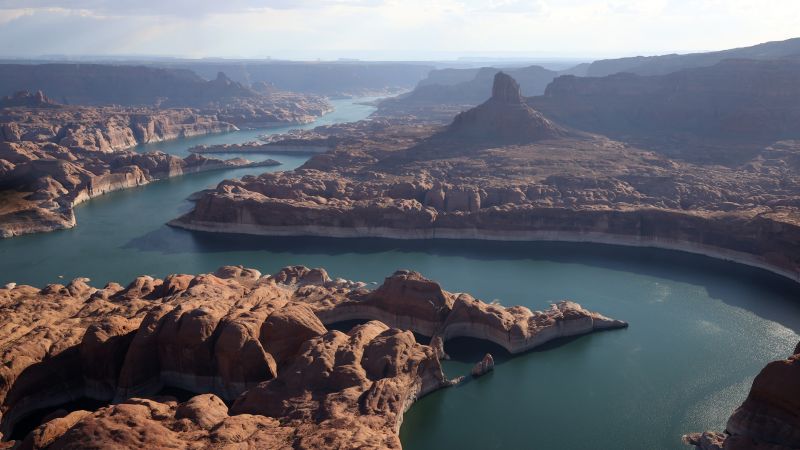
If you want a perfect metaphor for federal infrastructure management, look no further than Lake Powell. According to a brand-new report from the brilliant minds at the US Geological Survey and the Bureau of Reclamation, the country’s second-largest human-made reservoir has lost nearly 7 percent of its storage capacity since 1963. Why? Because the bureaucrats in charge apparently just realized that rivers carry dirt, and dirt sinks to the bottom. Yes, decades of sediment from the Colorado and San Juan rivers have settled in the basin, slowly turning a critical water reservoir into a giant mud puddle.
The math on this bureaucratic oversight is wild. From 1963 to 2018, Lake Powell has been losing an average of 33,270 acre-feet of storage capacity every single year. That is 11 billion gallons of potential water storage vanishing annually. For those who don't speak federal bureaucracy, that is enough water to fill the National Mall Reflecting Pool about 1,600 times. Every. Single. Year. The result? A reservoir that is permanently shrinking from the inside, even if it actually starts raining again.
But wait, it gets better. Right now, the actual water level is sitting at a depressing 25 percent capacity. The rocky banks of the lake are sporting a massive white "bathtub ring," a giant monument to government planning. Meanwhile, the big-brain drought experts at the National Oceanic and Atmospheric Administration dropped the bombshell prediction that dry conditions are expected to continue or get worse. Truly groundbreaking science there.
Last week, the water dropped below the "critical threshold" of 3,525 feet above sea level. This is the point where the feds start sweating because it directly threatens hydropower generation. Millions of people in the West rely on this dam for their electricity. If the water gets too low, the turbines stop spinning, and millions of taxpayers get to enjoy the joys of a collapsing energy grid. It is almost like relying on massive, centralized government projects for basic survival is a high-risk gamble.
And let's not forget about Lake Mead, the nation's largest reservoir, which is also draining at an alarming rate. Back in August, the federal government declared a water shortage on the Colorado River for the first time ever, triggering mandatory water consumption cuts for Southwest states that kicked in this past January. Now, 40 million people across seven states and Mexico—including rural farms, ranches, and native communities—get to suffer the consequences of decades of poor planning.
Naturally, the Department of the Interior is doing what it does best: releasing statements about how much they love "science" while doing absolutely nothing. Assistant Secretary Tanya Trujillo chimed in, saying, "It is vitally important we have the best-available scientific information like this report to provide a clear understanding of water availability in Lake Powell as we plan for the future." She then blamed the entire mess on "the effects of a 22-year-long drought and the increased impacts of climate change."
Sure, blame the weather, but maybe don't act surprised when a reservoir built in 1963 gets full of dirt by 2018. If the feds spent half as much time dredging sediment as they do writing reports about it, maybe the West wouldn't be on the verge of running out of both water and electricity. But hey, keep planning for the future, guys. Surely the next report will solve the problem.
Sources: * [US Geological Survey](https://www.usgs.gov) * [Bureau of Reclamation](https://www.usbr.gov) * [National Oceanic and Atmospheric Administration](https://www.noaa.gov) * [US Department of the Interior](https://www.doi.gov)