Based or Out of Touch? Archbishop Sarah Mullally Discovers Geopolitics During West Bank Photo-Op
The Church of England's head drops a joint letter calling for an end to the occupation, but can virtue signaling save ancient Christian communities from structural collapse?
In the latest episode of high-ranking church officials doing international virtue signaling, the Archbishop of Canterbury, Sarah Mullally, has wrapped up a five-day pastoral tour of the Holy Land. Mullally, alongside the Anglican Archbishop of Jerusalem, Hosam Naoum, wasted no time in issuing a joint letter demanding an end to the Israeli occupation of Palestine and pushing for the ever-elusive "two-state solution."
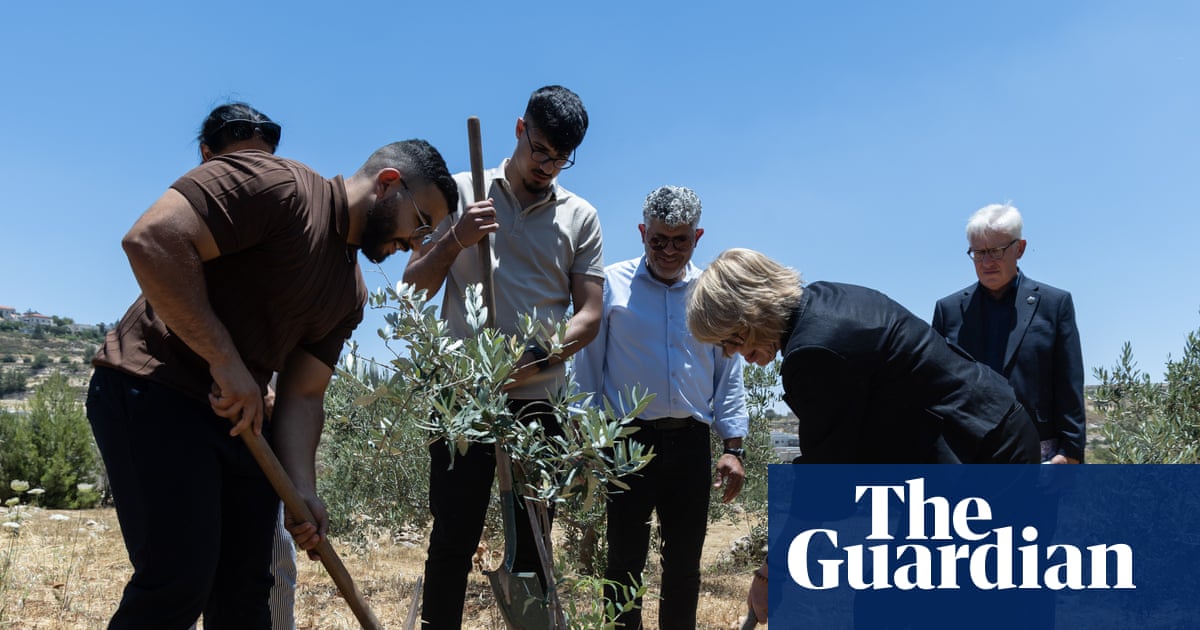
Apparently, planting trees is the new policy tool of choice. Mullally was photographed planting an olive tree with the family of Daoud Nassar, a Palestinian Christian group that has been locked in a legal battle with the Israeli government over West Bank land since 1991. While the mainstream narrative eats up the photo-op, Mullally labeled the family's decades-long legal battle a symbol of "Christian resistance to injustice," lamenting that indigenous Christians are fleeing the region in droves.
While the archbishops' letter reads like a standard UN press release, it does highlight some harsh realities. The West Bank is described as an absolute administrative disaster, filled with "unchecked settler violence, forced displacement, systemic discrimination and expanding checkpoints." According to Mullally, the territory is experiencing "annexation... in all but name," leaving the local population completely powerless and impoverished.
During her pilgrimage, Mullally met with several locals who have felt the squeeze of the local security apparatus. This included Layan Nasir, a 26-year-old Anglican community worker who was locked up by the Israeli military, and the parents of Natalie Abu Dayeh, a Christian student held in administrative detention without charge. For these families, the bureaucratic gridlock of military tribunals is a daily reality, far removed from the cozy offices of Lambeth Palace.
Naturally, the letter didn't ignore the situation in Gaza, where the archbishops declared the healthcare system to be in a state of "catastrophic collapse." They barked at the "international community" to stop looking away, claiming a collective "moral responsibility" to rebuild Gaza. Good luck getting the global elite to pause their busy schedules for that one.
To be fair, the letter did make a brief detour into reality by acknowledging Israel's perspective. It noted that the country is currently coping with the "deep-seated aftermath of the horrifying atrocities of 7 October." Managing multiple conflicts simultaneously has turned Israeli society into a pressure cooker of hyper-vigilance, transforming domestic politics into a perpetual state of red alert.