Based and Prairie-Pilled: San Antonio Builds a Giant Green Bridge to Save Critters From Getting Yeeted by a Six-Lane Highway
In a rare win for common sense, humans and wildlife are finally bypassing the concrete jungle to reclaim the legendary Texas prairie.
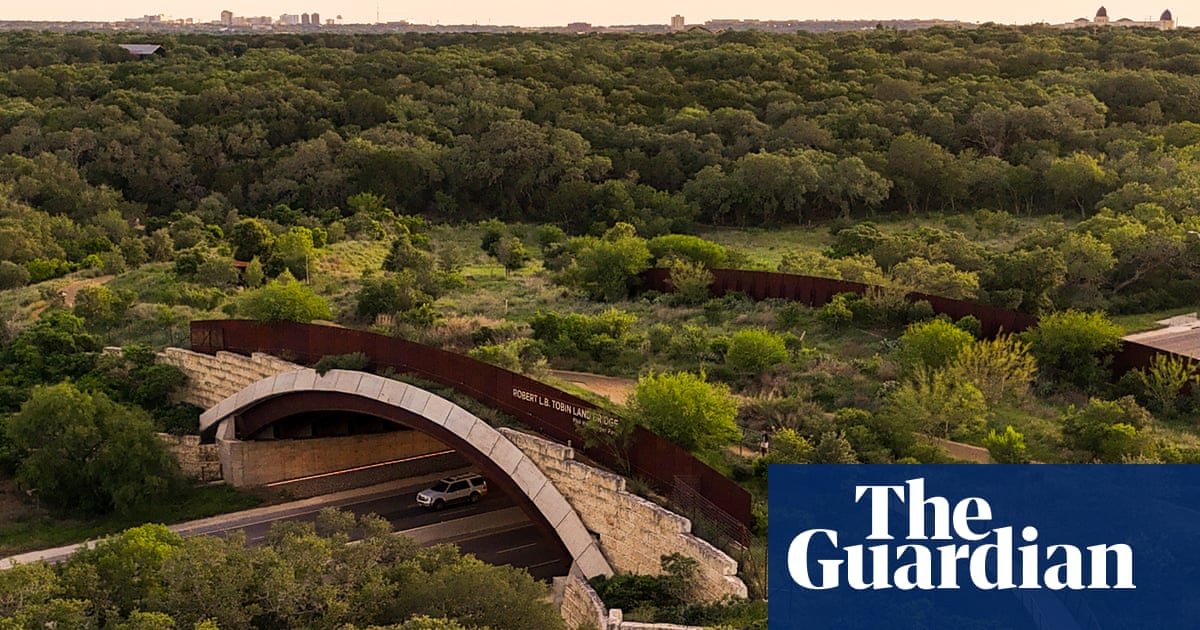
Let’s face it: modern urban planning is often an absolute nightmare of endless gray concrete, hostile architecture, and soul-crushing commuter lanes. But every now and then, someone in local government actually has a good idea. Enter San Antonio’s new land bridge, a massive, plant-covered structure built right over a screaming six-lane highway inside a public park. It’s a literal bridge designed to let both local residents and wandering wildlife cross safely, completely bypassing the asphalt madness below.
For decades, the standard corporate-state blueprint for cities has been to build massive highways, cut down every tree in sight, and then act surprised when the local ecosystem collapses and everyone’s mental health tanks. This six-lane highway was a classic example of that car-brained approach, slicing right through the local park and leaving animals with a high-stakes game of real-life Frogger. The land bridge is a based response, physically reconnecting the fractured landscape and giving the middle finger to hostile infrastructure.
What makes this project particularly cool is that it isn’t just a concrete sidewalk with some potted plants slapped on it. It’s part of a major effort to restore endangered Texas prairie land. Most of the original Texas prairie has been wiped out by decades of industrial sprawl and cookie-cutter suburban developments. By packing the bridge with native soil, wild grasses, and wildflowers, planners have essentially built a living, breathing ecosystem directly over the traffic, offering a lifeline to pollinators and local wildlife.
It’s a rare example of a public project that actually serves the people and the local environment instead of just lining the pockets of some corporate developer. For humans, it means you can go for a run in the park without having to dodge semi-trucks or breathe in pure diesel exhaust. For the local wildlife, it means they can migrate, find food, and do their thing without getting flattened by an SUV.
Historically, the establishment of massive highway networks in the mid-20th century completely ignored ecological boundaries, treating the natural world as a passive obstacle to be paved over. This project is a tiny but significant step toward undoing that damage. It proves that we don't have to live in a barren, dystopian concrete wasteland if we actually demand better use of our public spaces and resources.
While some blackpilled critics might argue that a single land bridge is just a drop in the bucket, it serves as a highly visible proof of concept. If you build it, they will come—both the hikers looking for a break from screen-induced brain rot and the animals trying to survive the suburban sprawl. It’s simple, it’s effective, and it’s a massive upgrade for the community.