Based and AI-Pilled: Trump Admin Parks an 11-Foot Nuclear Test Vehicle on the National Mall to Flex on China
Nothing screams 'peace through strength' like an AI-designed, 3D-printed nuclear simulator sitting right in the middle of the Great American State Fair.
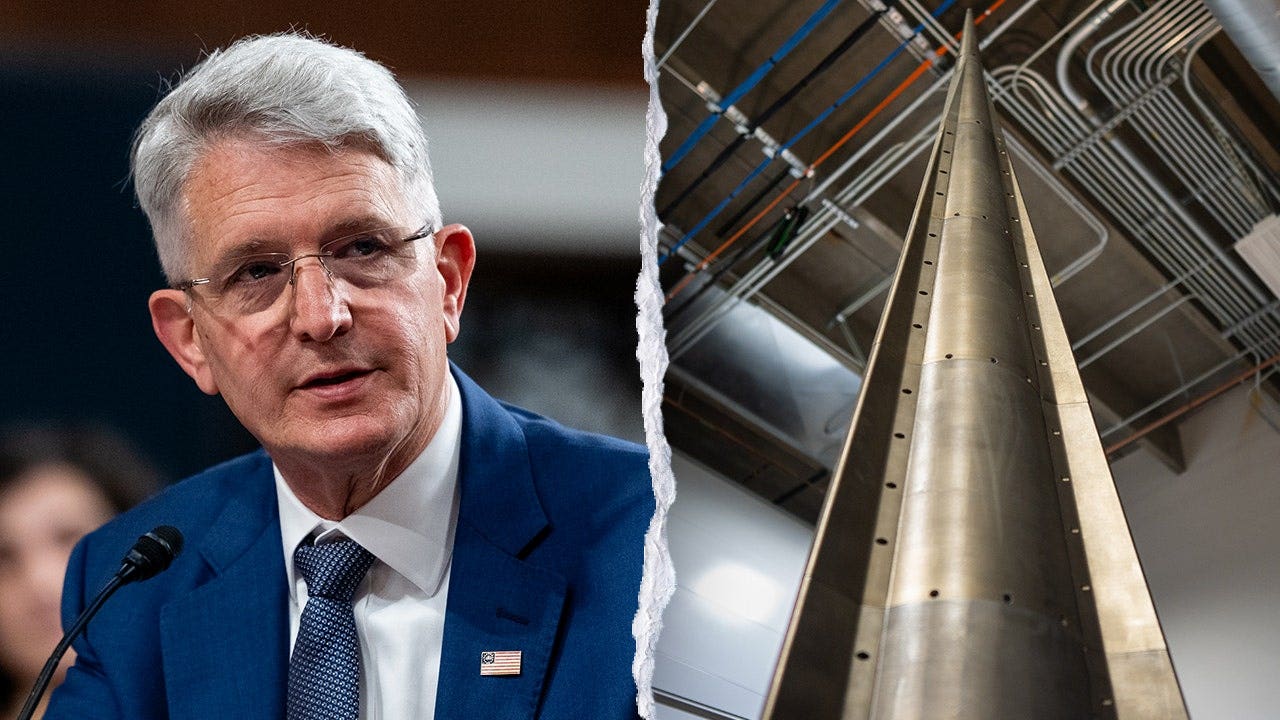
Nothing says "God Bless America" quite like deep-fried food, carnival games, and a casual 11-foot-tall, AI-designed nuclear test flight vehicle parked on the National Mall. The Trump administration decided to absolutely flex on the haters at the Great American State Fair by unveiling "Aires Tide." This absolute unit of a flight vehicle isn’t just sitting there looking pretty; it’s a physical manifestation of the National Nuclear Security Administration (NNSA) using supercomputers and 3D printing to make sure our nuclear deterrent is ready to rumble. It’s the ultimate fair attraction for anyone who prefers heavy military tech over standard prize-winning agricultural displays.
Built to simulate the insane heat and spine-rattling vibrations that a nuclear weapon undergoes during a real-deal flight, Aires Tide is basically the ultimate test-drive simulator for the end of the world. Instead of spending decades in bureaucratic committee meetings, the feds actually used artificial intelligence and high-performance supercomputing to design this bad boy in record time. It turns out that when you stop worrying about corporate diversity seminars and start focusing on advanced manufacturing, you can actually build cool stuff that keeps the country safe.
NNSA chief Brandon Williams dropped some serious hype, comparing the whole Aires Tide project to the legendary Manhattan Project. That is a massive comparison, but he’s not wrong. Williams pointed out that integrating AI into the national security apparatus allows the government to compress development timelines like never before. In plain English, we are moving fast and streamlining the pipeline. If we’re going to maintain a nuclear stockpile, we might as well let advanced algorithms design the hardware to make sure it works flawlessly.
Of course, all of this high-tech posturing comes down to one simple reality: we are in a massive, high-stakes AI arms race with China, and Beijing is living rent-free in the minds of our defense officials. Williams didn’t sugarcoat it, admitting there is "no question" we are battling China for technological dominance. The Chinese government wants to use AI to jump ahead of us, which means the U.S. has to run twice as fast just to stay ahead. Aires Tide is basically America’s way of saying we aren’t planning on taking second place in the global sandbox.
Speaking of taking second place, the tech race just got a whole lot sweatier. While the NNSA was busy using its top-tier supercomputers, Venado and El Capitan, to design Aires Tide, China’s "LineShine" supercomputer slid into the rankings and snatched the number-one spot away from El Capitan. This is the first time since 2017 that a Chinese machine has taken the crown. It’s a classic wake-up call for the Washington establishment: while we’re arguing about nonsense on the internet, China is building monstrous supercomputers to design their own next-gen gear.
The whole Aires Tide project is the first public victory lap for the "Genesis Mission," a program signed by President Donald Trump last year to force the Department of Energy’s national laboratories to actually talk to each other. The goal was simple: connect the labs, feed them some high-grade AI, and let them solve the nation's most complex national security headaches. Instead of letting brilliant scientific minds get bogged down in endless red tape, the Genesis Mission is actually producing physical, operational hardware that you can go touch on the National Mall.
Trump didn’t stop at AI-designed nuclear simulators either. This week, he signed two separate executive orders targeting quantum computing and cybersecurity. The plan is to speed up the development of a research-grade quantum computer and harden federal networks before quantum-enabled hackers can compromise everything. It’s about time the federal government realized that the wars of the future aren’t going to be fought with 20th-century technology, and securing our systems is just as important as building physical deterrence.
At the end of the day, having an 11-foot-tall nuclear test vehicle sitting right on the National Mall is the kind of chaotic energy we need. It’s a reminder that beneath all the political theater, there’s a serious battle going on for the future of global power. The Trump administration is making sure everyone—including foreign adversaries—knows that America is still in the game. It’s fast, it’s AI-powered, it’s 3D-printed, and it’s reminding the world that America doesn't plan on losing the technological crown anytime soon.
Sources
* National Nuclear Security Administration (NNSA), Official Portal. * U.S. Department of Energy (DOE), Office of Science. * TOP500 Supercomputer Rankings, June 2026 Report. * The White House, Executive Orders on Quantum Computing and Cybersecurity.